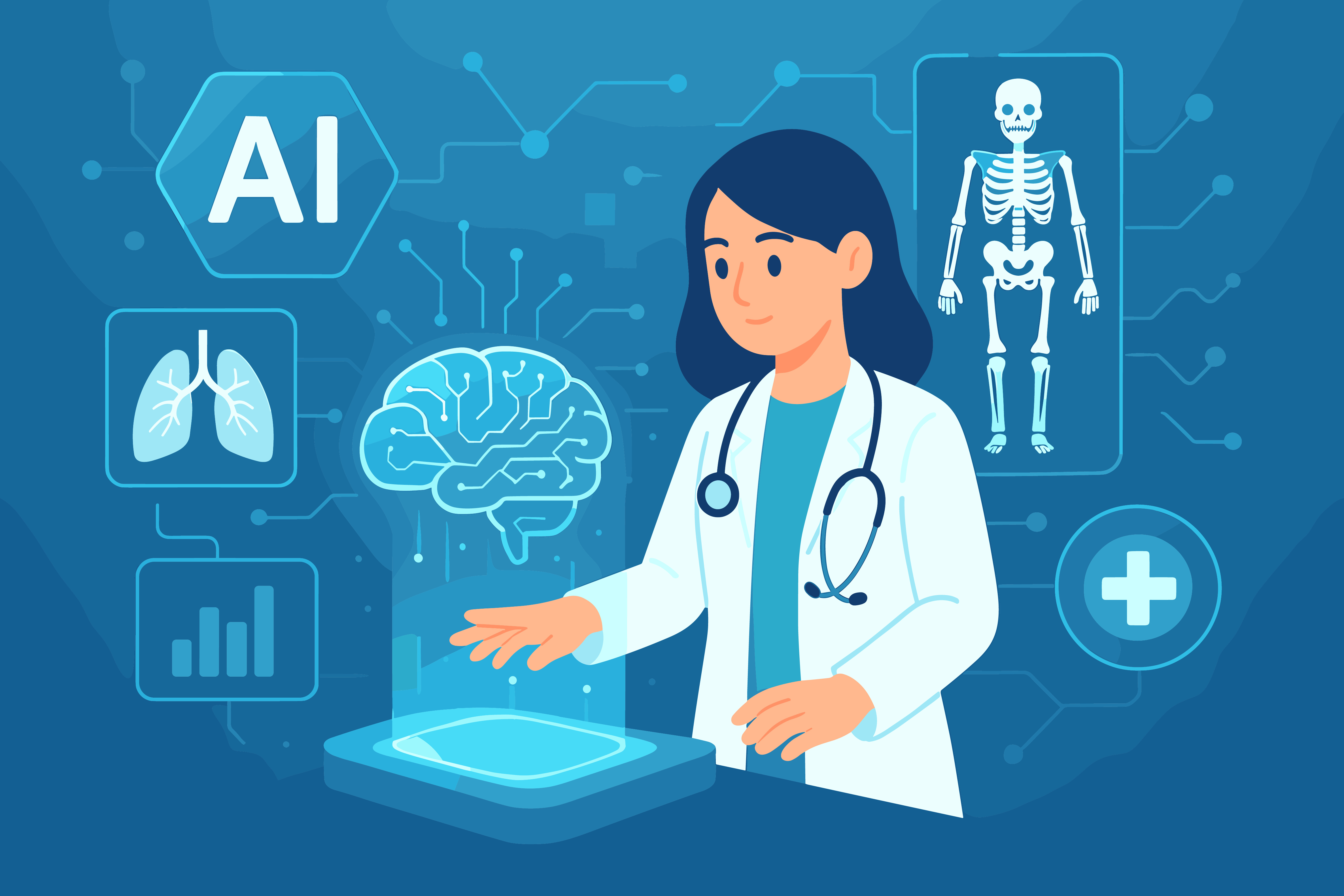

The future of artificial intelligence (AI) in medicine promises to be both exciting and transformative, bringing significant changes to the ways we understand and practice healthcare. AI holds the potential not only to enhance current processes but also to open up new avenues in patient care and treatment.
Personalized Medicine and Genetics
Genetic Analysis: With the expanding capabilities of genetic analysis, AI can play a main role in interpreting genetic data, and facilitating the development of personalized therapeutic approaches and medications tailored to specific genetic profiles.
Targeted Disease Treatment: AI will aid in the development of targeted therapies that effectively address specific pathogens or mutations at the molecular level. Advancements in Medical Imaging and Diagnosis
Enhanced Visualization: AI will continue to improve medical imaging methods, making them more accurate and informative, enabling earlier detection and treatment of diseases.
Integrated Diagnosis: Combining data from various sources (such as medical images, laboratory analyses, and patient histories) using AI to obtain a more comprehensive clinical picture.
Development of Digital Healthcare
Digital Health and Applications: The growing use of mobile applications and devices for health monitoring, driven by AI, will provide real-time recommendations and support.
Telemedicine: AI will enhance telemedicine capabilities, providing remote monitoring and consultations, which are particularly crucial for remote and underserved regions.
Innovations in Treatment and Therapy
Drug Development: AI will expedite the drug development process by analyzing potential molecular compounds and assessing their efficacy and safety.
Robotic Surgery: Advancements in robotic surgical systems for performing more complex and precise operations.
Ethical and Social Considerations
Accessibility and Equality: Ensuring equal access to innovative medical technologies based on AI for all segments of the population. Ethical Standards and Regulation: Developing ethical norms and legal frameworks for the use of AI in medicine, including issues of data confidentiality and moral responsibility.
The future of AI in medicine is a path full of innovation and promise. These technologies have the potential to radically change how patient care and treatment are delivered, making medical services more efficient, accessible, and personalized. However, achieving these goals requires concerted efforts in the fields of technology, ethics, and policy.
Here are some examples of AI applications in medicine:
Ada Health
Features: Uses AI to analyze symptoms and provide potential diagnoses. Benefits: Helps users understand their medical conditions and decide when to seek medical attention.
Babylon Health
Features: Offers virtual consultations and health advice using AI. Benefits: Provides access to medical assistance and primary diagnosis at any time.
Chatbot MD
Features: Health chatbots providing medical advice and symptom-tracking assistance.
Benefits: Improves patient awareness and provides support in disease management.
Zebra Medical Vision
Features: AI for analyzing medical images.
Benefits: Assists doctors in diagnosis and improves the accuracy of disease detection.
Butterfly Network
Features: Portable ultrasound scanner with AI image analysis.
Benefits: Facilitates ultrasound examination and interpretation.
K Health
Features: Provides personalized medical consultations based on user symptoms.
Benefits: Gives users more control over their health and helps them make informed decisions.
Prognos
Features: Analysis of clinical laboratory data to identify disease risks. Benefits: Facilitates early disease detection and improves prognostic models.
SkinVision
Features: Skin screening app identifying melanoma risk.
Benefits: Increases awareness of skin conditions and aids in early skin cancer detection.
Discover more from Doctor Trusted
Subscribe to get the latest posts sent to your email.