
Advancing Limb Salvage and Patient-Centered Care at SUNY Downstate
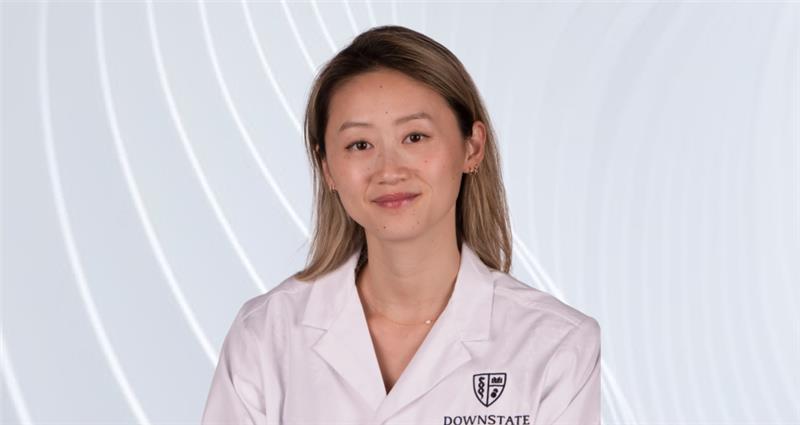
Dr. Yang Yang is an Assistant Professor of Surgery and Attending Surgeon in the Division of Vascular Surgery at SUNY Downstate Health Sciences University. Her journey to vascular surgery began with a strong foundation in the sciences—she earned her undergraduate degree from Drew University in Madison, New Jersey, where she majored in Neuroscience, Biochemistry, and Molecular Biology. This interdisciplinary background sparked her interest in the complex interplay between biological systems and disease processes that would later define her clinical focus.
After completing medical school at Drexel University College of Medicine in Philadelphia, where she pursued a research fellowship at the Penn State Hershey Heart and Vascular Institute, Dr. Yang went on to complete her integrated vascular surgery residency at the prestigious MedStar Washington Hospital Center in Washington, DC. Her residency years were marked by exceptional achievement—she received both the Research Resident Award from MedStar Health and the String of Pearls Resident Teaching Award from Georgetown University School of Medicine, early recognition of her dual commitment to clinical excellence and medical education.
Dr. Yang’s research portfolio is extensive and impactful, with numerous publications addressing critical issues in vascular care. Her work spans topics including post-thrombotic syndrome and deep venous disease, traumatic aortic injury, complications following endovascular aneurysm repair, and disparities in vascular access to care and patient outcomes. Her research has been published in respected journals such as Cureus, the Journal of Vascular Surgery, and Annals of Vascular Surgery, and she has presented her findings at major national and international conferences, including the Argentine Congress of Cardiovascular Surgery, VAST, the International Society of Endovascular Specialists, and the Vascular Annual Meeting, among others.
In her clinical practice, Dr. Yang treats the full spectrum of vascular pathology using both modern open vascular techniques and minimally invasive endovascular procedures. Her particular clinical interests lie in limb salvage and amputation prevention, deep vein thrombosis and the prevention of post-thrombotic syndrome, and pulmonary embolism management. Beyond her clinical and research roles, Dr. Yang remains deeply committed to education and mentorship, actively working to inspire and recruit the next generation of surgeons into the field.
Limb salvage and amputation prevention are central to your practice. What’s the most significant change you’ve seen in limb salvage approaches during your career, and what breakthrough are you most excited about for the next 5 years?
One of the most significant and truly transformative changes I’ve witnessed has been the evolution and refinement of deep venous arterialization (DVA) techniques. This approach has fundamentally expanded our treatment options for patients who were previously considered “no-option” candidates—individuals who faced almost certain major amputation because traditional arterial revascularization was either anatomically impossible or had already failed. DVA represents a paradigm shift in how we think about salvaging limbs when conventional pathways are exhausted.
What makes this particularly exciting is that we’re still in the relatively early stages of understanding the full potential of these techniques. Looking ahead to the next five years, I’m most enthusiastic about the continued refinement of DVA procedures and the concurrent innovation in devices specifically designed to optimize these interventions. We’re seeing improvements in catheter technology, better understanding of optimal venous targets, and enhanced imaging modalities that allow for more precise procedure planning and execution.
The trajectory we’re on has the genuine potential to dramatically reduce the rate of major amputations across our patient population. As we accumulate more long-term data, develop standardized protocols, and train more vascular specialists in these advanced techniques, I believe we’ll be able to offer hope—and functional limbs—to thousands of patients who would have had no alternatives just a decade ago. That possibility is what drives much of my clinical work and research focus.
Deep vein thrombosis and post-thrombotic syndrome prevention are particular interests of yours. What’s the biggest misconception healthcare providers have about DVT management, and what should they be doing differently?
The biggest and most problematic misconception I encounter regularly among healthcare providers is the tendency to view deep vein thrombosis as merely an acute, time-limited event—something that gets diagnosed, treated with anticoagulation for a defined period, and then essentially considered “resolved.” This perspective fundamentally misunderstands the natural history of venous thromboembolism and fails to account for the significant, often debilitating long-term consequences that many patients experience.
In reality, DVT should be understood as a condition with profound and lasting implications for venous health. The acute thrombotic event is just the beginning of what can become a chronic disease process. Post-thrombotic syndrome, which develops in a substantial percentage of DVT patients, can result in chronic pain, persistent swelling, skin changes, and, in severe cases, venous ulcerations that are notoriously difficult to heal and manage.
What providers need to do differently is adopt a much more proactive, longitudinal approach to DVT management. This means not just treating the acute event, but actively counseling patients about their future risk, the importance of compression therapy, and the need for ongoing surveillance. It also means being vigilant in recognizing how a prior history of DVT contributes to chronic venous disease that we encounter years later.
This is particularly crucial when evaluating patients who present with venous wounds or signs of chronic venous insufficiency. Too often, I see patients whose past DVT history is buried in their medical records but not connected to their current venous pathology. We need to be asking about prior DVT in every patient with venous disease, understanding that the event—whether it occurred five, ten, or twenty years ago—may be directly responsible for the problems they’re facing today. Making these connections allows us to provide more comprehensive, targeted treatment and better counsel patients about realistic expectations and the importance of ongoing management strategies.
You’ve published extensively on complications after endovascular aneurysm repair (EVAR). What should providers who refer patients for EVAR understand about long-term follow-up needs and potential complications that might present years later?
This is such a critical topic, and one where I think we need to do better at setting expectations both for patients and for our referring colleagues. The most important message I want to convey is this: EVAR is absolutely not a “one-time fix.” Despite the less invasive nature of the procedure compared to open repair—which can sometimes create the impression that it’s a simpler, more definitive solution—EVAR actually commits patients to lifelong surveillance and monitoring.
The reality is that endografts, while highly effective, are prosthetic devices placed in a dynamic, living vascular system that continues to change over time. The aorta can continue to dilate, the device can migrate, the fabric can fatigue, and seals can degrade. These processes don’t happen immediately; they often manifest years or even decades after the initial procedure, which is why the ongoing risk of late complications such as endoleaks, graft migration, limb occlusion, and even aneurysm rupture remains throughout the patient’s lifetime.
Referring providers need to understand that when they send a patient for EVAR, they’re also committing that patient to a rigorous, lifelong follow-up protocol—typically involving regular imaging studies at defined intervals for the rest of the patient’s life. This has practical implications: patients need to be compliant with follow-up, they need to be able to undergo repeated imaging (including considerations about contrast exposure and renal function), and there needs to be a clear plan for who will coordinate this ongoing surveillance as patients move, change insurance, or transition between providers.
What I emphasize to referring physicians is that durable outcomes with EVAR are absolutely achievable, but they require partnership and vigilance. We need to ensure patients understand this commitment before proceeding with the intervention, and we need to establish clear communication pathways so that when patients do miss surveillance appointments or present to other healthcare settings with symptoms, there’s awareness of their EVAR and its potential complications. Building these systems of consistent, long-term follow-up is just as important as the technical success of the initial procedure itself.
Vascular surgery often involves complex patients with multiple comorbidities and challenging social situations. How do you balance aggressive intervention to save limbs or lives with a realistic assessment of what patients can tolerate or manage post-operatively?
This balance is, without question, one of the most nuanced and challenging aspects of vascular surgery practice. Our patients frequently present with multiple medical comorbidities—diabetes, renal disease, heart disease, chronic lung disease—and are often elderly or frail. Add to that complex social situations—limited support systems, financial constraints, housing instability, transportation challenges—and you have scenarios where technical success in the operating room doesn’t necessarily translate to meaningful improvement in quality of life or long-term outcomes.
The foundation of how I approach this balance is honest, transparent communication with patients and their families. This starts from the very first consultation. I’ve learned that patients and families can handle difficult information—what they can’t handle well is being blindsided by complications or outcomes they weren’t prepared for, or feeling like decisions were made without their input or understanding.
When I’m evaluating a patient for a major intervention—whether it’s a complex revascularization, an amputation, or an aneurysm repair—I make it a priority to have detailed conversations about not just the procedure itself, but the entire recovery trajectory. What will the postoperative course realistically look like? How long will they be in the hospital? What kind of rehabilitation will be needed? What does home care look like, and do they have the support structure to manage it? What are the realistic functional outcomes we’re hoping to achieve, and what’s the likelihood we’ll get there?
I also talk explicitly about risks in a way that’s personalized to them, not just the standard consent form statistics. Based on their specific comorbidities and functional status, what complications are they most vulnerable to? What’s the risk that they might not survive the procedure or the immediate postoperative period? What’s the chance that the intervention won’t work as we hope, and what are our backup plans?
This process of setting clear expectations allows for genuine shared decision-making. It transforms the conversation from “the surgeon is recommending X procedure” to “here are our options, here’s what each realistically involves, here’s what I think gives you the best chance of achieving your goals, and now let’s decide together what aligns with what you can handle and what matters most to you.”
Sometimes, after these conversations, patients and families choose a less aggressive path than I might have initially proposed. Sometimes they choose to proceed with major interventions despite significant risks because the alternative—living with the current condition or facing certain amputation—is unacceptable to them. Both decisions can be the right decision when they’re made with full information and careful consideration of the patient’s values and circumstances.
I also try to remain flexible and responsive as situations evolve. A treatment plan isn’t a rigid contract. If we start down one pathway and it becomes clear the patient isn’t tolerating it well, or their social situation changes, or new information comes to light, we recalibrate. The goal is always to optimize outcomes in a way that’s meaningful to the patient, and sometimes that means knowing when to de-escalate or shift course.
Ultimately, what this requires from me as a surgeon is humility—acknowledging that I don’t have all the answers, that technical skill alone doesn’t determine success, and that the patient’s perspective on what constitutes a “good outcome” may be different from mine. When we practice with that kind of humility and partner with patients in authentic ways, I find that even when outcomes aren’t ideal, patients and families feel cared for and respected, and that matters profoundly.
You received the String of Pearls Resident Teaching Award from Georgetown—a testament to your commitment to education. What teaching approach or principle has been most effective in training the next generation of surgeons?
I’m deeply honored to have received that recognition, and it really reinforced for me how much I value the educational mission of academic medicine. When I reflect on what has been most effective in my teaching, one principle rises above all others: patience. It sounds simple, perhaps even obvious, but I’ve found that genuine, consistent patience is truly transformative in surgical education.
Everyone—every single learner—starts somewhere. No one steps into the operating room or sees their first patient with inherent expertise. What I try to remember, and what I remind myself of especially during challenging teaching moments, is that I was once exactly where my students and residents are now. I had to learn how to tie my first knot, how to interpret my first angiogram, and how to think through complex clinical decision-making. Having empathy for that learning process and creating an environment where it’s safe to not know something, to ask questions, and yes, even to make supervised mistakes, is foundational to effective teaching.
What I’ve consistently observed is that when learners feel genuinely supported—when they sense that their teacher has confidence in their eventual success and isn’t judging their current limitations—their engagement and growth accelerate almost exponentially. This is particularly true in surgery, where the stakes feel high, and the learning curve can be steep. If trainees are anxious about being criticized or embarrassed, they become tentative, they hide their uncertainties, and paradoxically, their learning slows down.
The other critical element is providing meaningful hands-on opportunities. Surgical training is an apprenticeship model at its core, and there’s simply no substitute for graduated, progressive hands-on experience. I make it a priority to thoughtfully delegate appropriate aspects of cases to learners at every level—whether that’s allowing a medical student to close, giving a junior resident primary responsibility for a straightforward procedure with supervision, or coaching a senior resident through a complex case where I’m serving more as an advisor than the primary operator.
When you combine patience with genuine opportunities for practical learning, something remarkable happens: learners don’t just acquire technical skills, they develop confidence, clinical judgment, and the ability to think independently. They become not just competent technicians, but thoughtful surgeons. That’s the goal that drives my teaching, and seeing that transformation in trainees is one of the most rewarding aspects of academic practice.
You’re passionate about recruiting students into surgery. Surgery has historically struggled with work-life balance and burnout. How do you honestly address these concerns with students while still advocating for surgical careers?
This is such an important question, and it’s one I take very seriously because I refuse to recruit students into a field by painting an unrealistic or misleading picture. The concerns about work-life balance and burnout in surgery are legitimate—they’re based on real experiences and real data—and students are right to ask about them directly.
What I emphasize in these conversations is that there’s tremendous diversity within surgical careers, and one critical distinction that often gets lost is this: academic surgery is only one pathway, and it’s certainly not the entire profession. When students express concerns about lifestyle, they’re often reacting to what they’ve observed during their clinical rotations—seeing exhausted residents, attending physicians who seem to live in the hospital, faculty juggling clinical, research, and administrative demands with little apparent personal time.
But here’s the reality I share with them: while surgical training is indeed demanding across the board—there’s no sugarcoating that residency requires significant sacrifice of time and often involves grueling schedules—life as an attending surgeon offers far, far more flexibility and autonomy than many students realize. Once you complete training, you have substantial control over how you structure your practice and, by extension, your life.
Surgeons in private practice, community hospital settings, or even certain academic positions can design careers that align with their personal priorities. You can choose how many days a week you operate, whether you take calls, whether you want to focus primarily on elective procedures with predictable scheduling, or whether you thrive in the acute, emergent setting. You can decide whether you want to be part of a large group that provides schedule flexibility or whether you prefer a smaller practice with more autonomy. You can choose to live in a major metropolitan area or a smaller community where your expertise is highly valued, and the pace may be different.
I also point out that surgery offers something many other fields don’t: a clear, tangible impact. There’s profound meaning in being able to directly intervene in disease, to quite literally save limbs and lives with your own hands. For many surgeons, that sense of purpose, that deep professional satisfaction, provides resilience against the challenges of the work. It’s not about glorifying exhaustion—that’s not healthy for anyone—but rather about acknowledging that meaningful work can sustain you in ways that make the demands feel worthwhile.
Ultimately, my message to students is this: be realistic about the training pathway, understand that it requires commitment and sacrifice, but also recognize that you’re not locked into a single lifestyle for your entire career. Surgery can be what you make of it, and with thoughtful planning and honest self-reflection about what matters most to you, it’s absolutely possible to build a surgical career that’s both professionally fulfilling and personally sustainable.
Dr. Yang Yang practices at SUNY Downstate Health Sciences University in Brooklyn, New York, where she continues to advance the field of vascular surgery through clinical innovation, research, and dedicated mentorship of future surgeons.
If you enjoyed this piece, subscribe to our monthly newsletter to receive even more in-depth insights.
Discover more from Doctor Trusted
Subscribe to get the latest posts sent to your email.


