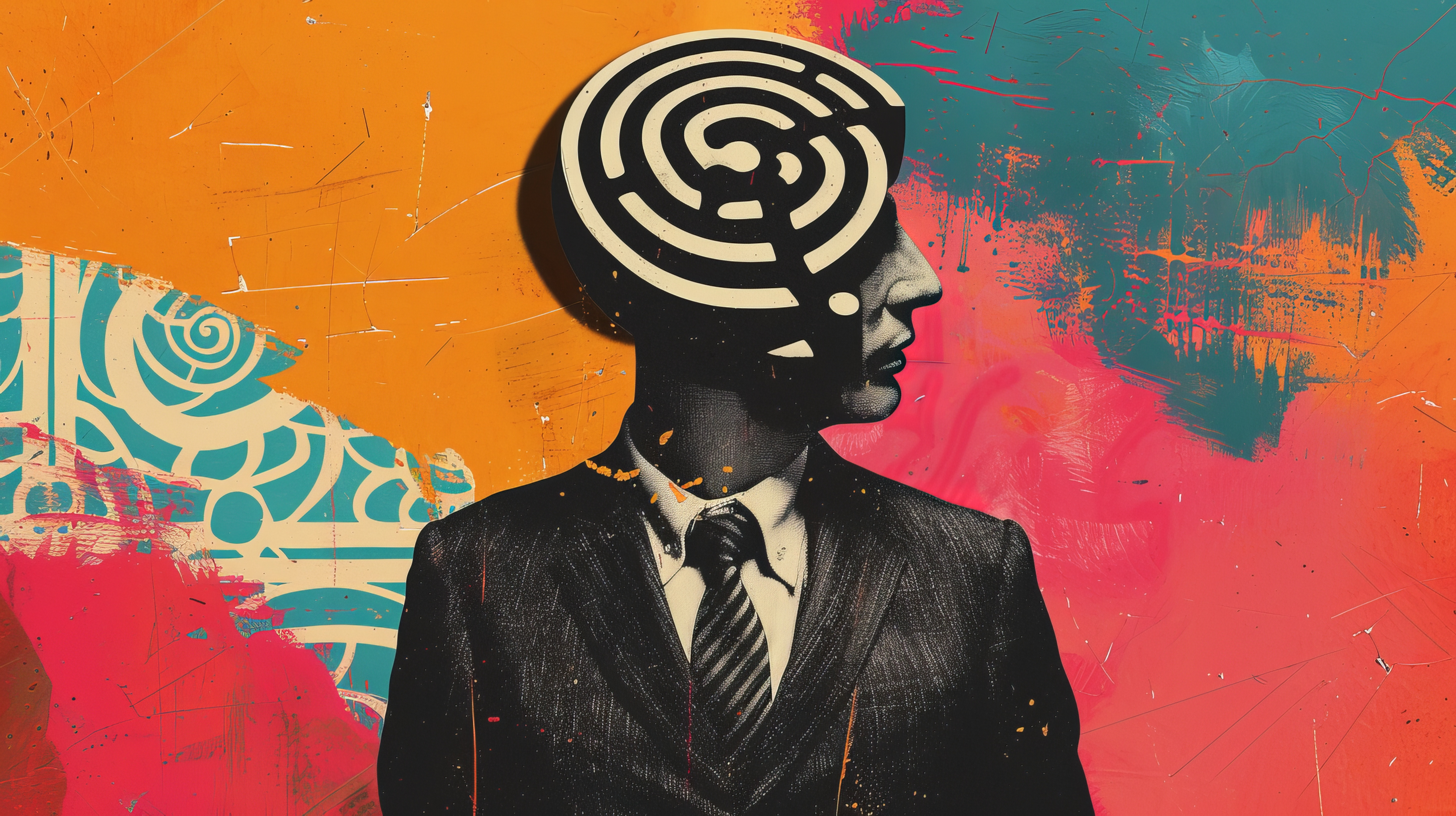
A growing movement is pushing medicine to stop trying to fix neurodivergent minds — and start building a world they can thrive in.
Sarah was 34 years old when a psychiatrist finally told her she had ADHD. By that point, she had spent two decades being called scatterbrained, oversensitive, and chronically unreliable by employers who couldn’t understand why someone so clearly intelligent kept missing deadlines and losing track of conversations. She had been treated for depression, then anxiety, then a poorly specified “mood disorder.” The medications helped at the edges but never quite reached whatever was actually wrong. When the diagnosis came, her first reaction was not relief. It was fury — at the years lost, the self-blame accumulated, the systems that had repeatedly failed to see her.
Her story is not unusual. It is, increasingly, the story of a generation.
The Diagnosis Gap
For decades, ADHD and autism spectrum disorder were understood, in the popular and clinical imagination alike, as conditions of childhood — something you identified in restless boys who couldn’t sit still in class, or in children who didn’t make eye contact. The diagnostic criteria were built around this picture. The research was conducted predominantly on children, and predominantly on boys. Girls, women, and adults who didn’t fit the stereotype simply didn’t get diagnosed. They got labeled difficult, anxious, or lazy instead.
The scale of this historical blind spot is only now becoming apparent. Prevalence studies suggest that roughly 2.5 to 4% of adults worldwide meet diagnostic criteria for ADHD, yet a significant proportion remain unidentified well into adulthood. Research published in the Journal of Attention Disorders found that women with ADHD receive their first diagnosis on average 5 to 7 years later than men — with mean age at diagnosis for women clustering around the early-to-mid thirties. For autism, the diagnostic lag is even more pronounced: studies tracking adults identified after age 18 show that autistic women wait an average of 4 to 6 years longer than autistic men for a formal assessment, with some cohorts not receiving diagnoses until their forties or fifties. These are not trivial delays. They represent years during which the wrong conditions are being treated, or no condition is being treated at all. Adult autism diagnosis has similarly surged — not because autism is becoming more common, but because clinicians are finally looking for it in populations they previously ignored: women, people of color, and anyone whose coping mechanisms were sophisticated enough to mask the underlying neurology.
This phenomenon — known in clinical literature as “late identification” or colloquially as a “missed diagnosis” — carries real consequences. Research consistently shows that undiagnosed ADHD in adults is associated with elevated rates of anxiety, depression, substance use disorders, relationship difficulties, and occupational dysfunction. The problem is not the neurology itself. The problem is decades of living in environments that were never designed for your brain, without any framework for understanding why everything felt harder than it apparently was for everyone else.
What “Neurodivergent” Actually Means — and What It Doesn’t
The term neurodivergent, coined by autistic sociologist Judy Singer in the late 1990s, has migrated from activist circles into mainstream clinical and corporate discourse with remarkable speed. It is used to describe brains that process information, attention, sensation, and social experience in ways that diverge statistically from the population norm — including ADHD, autism, dyslexia, dyspraxia, and related profiles.
The concept carries intellectual weight, but it also requires precision. Describing ADHD or autism as “neurological differences rather than disorders” is not a denial that these conditions can cause genuine suffering or functional impairment. It is a claim about where the suffering originates. The neurodiversity framework argues — and a growing body of research supports — that much of the difficulty experienced by neurodivergent individuals is not intrinsic to their neurology, but is produced by the mismatch between that neurology and environments built around a narrow definition of normal.
This distinction matters clinically. It shifts the therapeutic question from “how do we make this person’s brain behave more typically?” toward “how do we reduce the friction between this person’s brain and the world they inhabit?” These are not the same question, and they do not always produce the same answers.
It is equally important, however, to resist the overcorrection. The neurodiversity framework has sometimes been criticized — including by autistic and ADHD researchers themselves — for inadvertently minimizing the experiences of people with high support needs, for whom the daily challenges of their neurology extend well beyond workplace accommodation. A framework that works for one part of the spectrum does not automatically speak for all of it.
The Diagnostic Challenge in Adulthood
Diagnosing ADHD or autism in adults is considerably more complex than diagnosing it in children, for reasons that are both clinical and structural. Clinically, adults have had decades to develop compensatory strategies — sometimes called “masking” in the autistic community — that can obscure diagnostic features. A highly intelligent autistic adult may have learned to script social interactions so fluently that an untrained clinician sees no red flags. An adult with ADHD may have constructed elaborate external systems to manage their working memory deficits, leaving their impairment invisible until those systems collapse under stress.
Structurally, adult diagnostic pathways remain underfunded and poorly integrated into primary care. In the United States, most psychiatrists and psychologists receive limited training in adult presentations of autism specifically. Waiting times for comprehensive neuropsychological evaluation can extend to months or years, and cost barriers exclude large portions of the population from formal assessment altogether.
The diagnostic criteria themselves remain a point of contention. The DSM-5 requires that ADHD symptoms be present before age 12, a threshold that critics argue is based on research conducted almost exclusively on children and does not adequately account for the ways hormonal changes, increasing cognitive demands, or the removal of school-based structure can unmask symptoms in adulthood. For autism, the criteria have been revised across DSM editions in ways that have alternately broadened and narrowed the diagnostic net, contributing to inconsistency across clinical settings.
None of this means adult diagnosis is impossible or unreliable — it means it requires more time, more nuance, and clinicians trained to look for presentations that don’t match the textbook pictures developed around children.
Medication Is Part of the Picture. Not All of It.
Here it is worth being precise about a distinction the popular conversation often blurs: ADHD and autism are not the same kind of thing, and they do not have the same evidence base.
ADHD is a neurodevelopmental disorder with a well-established neurobiological profile — highly heritable (estimates range from 70 to 80%), associated with consistent structural and functional differences in prefrontal and striatal circuits, and linked to dysregulation of dopamine and norepinephrine systems. Its pharmacology is among the most replicated in all of psychiatry. Stimulant medications — methylphenidate and amphetamine-based compounds — show effect sizes in the moderate-to-large range (Cohen’s d approximately 0.5 to 0.8) for reducing core symptoms in adults, figures that are unusually robust for a psychiatric intervention. For many people, medication is genuinely transformative. It is neither appropriate nor accurate to dismiss it.
What is increasingly recognized, however, is that medication addresses symptoms without addressing context. Cognitive-behavioral therapy adapted specifically for adult ADHD has demonstrated effect sizes in the small-to-moderate range (d ≈ 0.3 to 0.5) for outcomes including organization, emotional regulation, and occupational functioning — meaningfully smaller than stimulants for core attention symptoms, but targeting dimensions that medication alone does not reach. Combined approaches consistently outperform either intervention in isolation, particularly on quality-of-life and functional outcomes.
Autism spectrum disorder presents an importantly different picture. Its etiology is substantially more heterogeneous than ADHD’s — autism is better understood as a family of conditions sharing certain behavioral features but arising from diverse genetic, neurological, and environmental pathways. There is no single neurobiological signature, no approved pharmacological treatment for the core features of autism, and no medication target analogous to the dopamine system in ADHD. Medications may be used to address co-occurring conditions — anxiety, sleep disturbance, irritability — but the evidence base for autistic adults points most strongly toward individualized support, skills-based interventions, and environmental modification: sensory-friendly workplaces, flexible communication norms, explicit rather than implied social expectations.
The Workplace as a Diagnostic Pressure Point
Much of the contemporary conversation about adult neurodivergence is happening in the workplace, and for understandable reasons. The modern knowledge economy — with its open offices, constant context-switching, unstructured time, and heavy reliance on intuitive social navigation — represents a near-perfect mismatch for many ADHD and autistic cognitive profiles. The pandemic-era shift to remote work inadvertently revealed something important: large numbers of people who had quietly struggled in office environments found they functioned significantly better when given control over their sensory environment and workflow structure.
Major employers, particularly in technology, have begun developing neurodiversity hiring programs — initiatives specifically designed to recruit and retain autistic and ADHD employees by redesigning interview processes, onboarding protocols, and performance evaluation frameworks. The evidence on these programs’ outcomes is still accumulating, and questions remain about whether they represent genuine structural change or a form of rebranding. But they signal a shift in the conversation — from “how do we treat this condition?” to “how do we redesign the system?”
What Comes Next
The neurodiversity movement has done something important: it has created space for adults who were never seen by the systems meant to help them to understand their own minds more accurately and more compassionately. Late diagnosis, even in middle age, consistently shows up in qualitative research as profoundly meaningful — not because it changes the neurology, but because it changes the narrative. The years of failure, exhaustion, and self-blame acquire a different meaning when there is a framework that explains them.
The clinical challenge now is to match that narrative shift with structural reality: training more clinicians in adult presentations, reducing access barriers to assessment, building the evidence base for non-pharmacological interventions, and developing workplace accommodation frameworks that are grounded in data rather than goodwill alone.
The brain you were born with is not the brain that needs fixing. But the systems around it — diagnostic, professional, social — have considerable catching up to do.
Sources
- Faraone, S.V., et al. (2021). “The World Federation of ADHD International Consensus Statement: 208 Evidence-Based Conclusions about the Disorder.” Neuroscience & Biobehavioral Reviews, 128, 789–818. https://doi.org/10.1016/j.neubiorev.2021.01.022
- Matte, B., et al. (2015). “ADHD in adults: a concept in evolution.” Attention Deficit and Hyperactivity Disorders, 7(2), 87–102. https://doi.org/10.1007/s12402-014-0149-z
- Lai, M.C., et al. (2015). “Sex/Gender Differences and Autism: Setting the Scene for Future Research.” Journal of the American Academy of Child & Adolescent Psychiatry, 54(1), 11–24. https://doi.org/10.1016/j.jaac.2014.10.003
- Huang, I.T., et al. (2023). “Late-identified autism in adults: clinical and psychosocial outcomes.” Autism Research, 16(4), 722–734. https://doi.org/10.1002/aur.2894
- Singer, J. (1999). “Why can’t you be normal for once in your life?” In M. Corker & S. French (Eds.), Disability Discourse. Open University Press.
- Sonuga-Barke, E.J.S., et al. (2013). “Nonpharmacological Interventions for ADHD: Systematic Review and Meta-Analyses of Randomized Controlled Trials.” American Journal of Psychiatry, 170(3), 275–289. https://doi.org/10.1176/appi.ajp.2012.12070991
- Cage, E., & Troxell-Whitman, Z. (2019). “Understanding the reasons, contexts and costs of camouflaging for autistic adults.” Journal of Autism and Developmental Disorders, 49(5), 1899–1911. https://doi.org/10.1007/s10803-018-3830-2
- Cortese, S., et al. (2018). “Comparative efficacy and tolerability of medications for attention-deficit hyperactivity disorder in children, adolescents, and adults: a systematic review and network meta-analysis.” The Lancet Psychiatry, 5(9), 727–738. https://doi.org/10.1016/S2213-2600(18)30269-4
- Austin, R.D., & Pisano, G.P. (2017). “Neurodiversity as a Competitive Advantage.” Harvard Business Review, 95(3), 96–103.
- Chapman, R., & Bovell, V. (2022). “Neurodiversity, disability, wellbeing.” In N. den Houting & D. Milton (Eds.), The Neurodiversity Reader. Pavilion Publishing.
Discover more from Doctor Trusted
Subscribe to get the latest posts sent to your email.