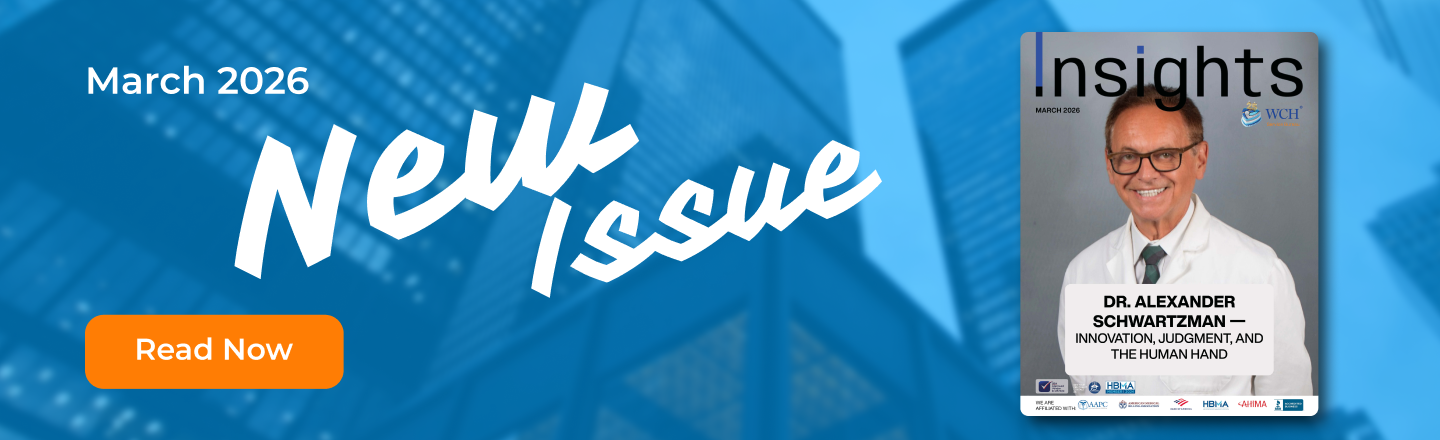

There is a particular kind of physician who is rare in modern medicine — one who operates at the highest level of clinical complexity, shapes the next generation of surgeons, navigates the corridors of institutional leadership, and still finds time to ask whether things could be done better. Dr. Alexander Schwartzman is that kind of physician.
For over two decades, Dr. Schwartzman has been a defining presence at SUNY Downstate Health Sciences University in Brooklyn — one of the country’s most demanding and consequential academic medical centers. He serves as Vice Chairman of the Department of Surgery and Associate General Surgery Program Director, overseeing one of the largest surgical residency programs in the nation. He has been named Best Teacher of the Year ten times by the medical students and residents he has trained, and has been appointed Clinical Assistant Dean — a recognition that speaks not just to his surgical skill, but to the trust his institution places in him as an educator and leader.
His reach extends well beyond the operating room. Dr. Schwartzman is a SUNY Downstate University Faculty Senator and was recently elected as Healthcare Sector Representative to the SUNY-wide Faculty Senate, earning him a seat on its Executive Committee. He serves as Secretary/Treasurer of the Medical and Dental Staff, sits on the Executive Committee of the College of Medicine, and is President-elect of the Center-wide Assembly of SUNY Downstate Health Sciences University. He is a Member of the New York State Board of Medicine, a physician liaison to the New York State Board of Athletic Trainers, a member of the Federation of State Medical Boards, and Governor of the Brooklyn/Long Island Chapter of the American College of Surgeons.
And through all of it, he maintains a full, high-complexity general surgery practice — because for Dr. Schwartzman, the operating room has never been something to step back from. It is where everything else begins.
We sat down with him to talk about Brooklyn, about what it means to teach surgery, about the technologies reshaping the field, and about what four decades of medicine has taught him that no textbook ever could.
You’ve spent decades at SUNY Downstate in Brooklyn. What drew you there, and what has kept you committed to this institution and this community for so long?
Brooklyn drew me because it represents medicine in its most real and unfiltered form. This is a place that is diverse, complex, and demanding — it requires both clinical rigor and genuine human understanding in equal measure. You cannot survive here on technique alone. But what has kept me here, truly, is the mission. Downstate serves a community that needs us in ways that are immediate and profound. That sense of purpose — combined with the opportunity to teach, to build programs, to see the direct impact of your work on people’s lives — has made this more than a workplace. It has been a calling.
You earned your MBA more than 30 years after your MD. What prompted that decision, and how has it transformed the way you approach surgery and academic leadership?
After three decades in medicine, I came to a realization that many of the most pressing challenges facing physicians were not clinical at all — they were structural. Finance, systems design, leadership, policy. We were trained to heal patients, but no one trained us to navigate the ecosystem in which healing actually happens. Pursuing an MBA gave me a framework to understand healthcare as a whole. It fundamentally changed how I approach decisions. I began to see clinical excellence and operational strategy not as separate worlds but as inseparable ones. A surgeon who understands only the operating room is only half equipped for what modern medicine demands.
You’ve won ten “Best Teacher of the Year” awards. What is your philosophy on teaching surgery — a field where mistakes can have life-or-death consequences?
Teaching surgery demands honesty, humility, and accountability — from the teacher as much as from the trainee. My philosophy has always been to create an environment where residents can learn safely, while never losing sight of what is at stake. Those two things are not in contradiction; they reinforce each other. A trainee who is afraid to ask a question is far more dangerous than one who asks too many. So residents must feel supported enough to be curious and challenged enough to grow. Technical skill can be taught — it comes with repetition and guidance. But judgment is different. Judgment develops through mentorship, through reflection, through being present for the hard cases and thinking carefully about what happened and why.
How has surgical education evolved over your 40-plus years in medicine, and are today’s residents better prepared — or facing different challenges — than your generation?
The evolution has been enormous, and it continues to accelerate. Today’s residents have access to simulation technology, advanced imaging, and volumes of data that we simply did not have. In many ways, the tools available to them are extraordinary. But they also face pressures that my generation never encountered — documentation burdens that consume hours that could be spent at the bedside, reduced operative time, and an ever-increasing complexity of patient care. It would be a mistake to say they are weaker or stronger than previous generations. They are different. And their particular challenge is learning to master judgment in an era of information overload — to know not just what the data says, but what it means for the patient in front of them.
You are now Interim Chairman of the Department of Surgery. What is your vision for the department’s future?
My goal is to strengthen what is already exceptional about this department’s clinical work while meaningfully expanding our academic productivity and our capacity for interdisciplinary collaboration. I want us to be known not only for the complexity of cases we manage — and we manage extraordinarily complex cases — but also for innovation, for the quality of our mentorship, and for the measurable impact we have on the health of our community. Those things are not in competition with each other. A department that pursues all of them together is one that becomes truly great.
You specialize in robotic and laparoscopic surgery. How have these technologies changed what is possible, particularly at an inner-city academic medical center?
Minimally invasive and robotic technologies have fundamentally changed surgery — the precision, the visualization, the ability to operate through incisions that would have been unthinkable a generation ago. Less pain, faster recovery, fewer complications. But in a place like this, there is another dimension to it. Many of our patients simply cannot afford prolonged recovery times. They cannot take weeks off work. They have families, obligations, lives that cannot wait. So when we can get someone through a major operation and back on their feet faster, that is not just a clinical benefit — it is an equity issue. Used thoughtfully, technology becomes a tool for justice as much as for medicine.
Your research includes developing a novel abdominal wall retractor that permits laparoscopic access without gas insufflation. Can you tell us about that innovation?
The retractor grew out of a straightforward clinical observation: insufflation — the gas we use to create working space inside the abdomen — is not the right solution for every patient. For those with significant cardiopulmonary compromise, pneumoperitoneum can create real physiological stress. So the question became: can we maintain visualization and adequate working space without it? That was the problem we set out to solve. The device we developed lifts the abdominal wall mechanically, allowing minimally invasive access without the need for gas. If this approach were adopted more widely, it could extend the benefits of minimally invasive surgery to a population of patients who today are simply not considered candidates for it.
Looking twenty years ahead — will robotic surgery replace traditional techniques, or will the human hand always have an irreplaceable role?
Robotics will absolutely continue to expand, and the technology will become more sophisticated in ways we can only partially anticipate. But no, it will not replace the surgeon. Technology enhances human capability — it extends what we can see and do — but it does not replace judgment, it does not replace adaptability, and it does not replace the kind of intuition that develops over years of operating on real patients in real situations. Surgery is both a science and an art. And the art — knowing when to proceed and when to stop, reading what the tissue is telling you, managing the unexpected — will always require a human mind and a human hand.
During the COVID-19 pandemic, you and your team identified a distinct pattern of barotrauma in patients on mechanical ventilation. How did that discovery emerge?
We began noticing patterns of barotrauma that did not fit what we knew about traditional ARDS physiology. Something was different, and it was consistent enough across patients that we knew it deserved careful attention. Through meticulous observation, case-by-case comparison, and sustained discussion across teams, we were able to recognize what appeared to be a clinically distinct pattern. The experience reinforced something I have believed throughout my career: progress in medicine rarely begins in a laboratory. More often, it begins with clinicians paying close, disciplined attention to what is happening at the bedside and having the intellectual honesty to say — this does not fit what we thought we knew.
How do you balance rigorous clinical practice with producing meaningful research?
I think the framing of “balance” can be misleading, because it implies that clinical work and research are competing for the same space. My experience has been almost the opposite. Clinical work generates questions — real, urgent, important questions — and research is the attempt to answer them. When your investigations arise directly from problems you encountered caring for actual patients, scholarship stops feeling like an added burden and becomes a natural extension of what you are already doing. The two feed each other. That integration, rather than a strict separation, is what has made it sustainable for me over many years.
You hold an extraordinary array of leadership positions alongside a busy surgical practice. How do you manage it all?
Time management matters, of course, but I have come to believe that prioritization is the more fundamental skill. The question is never simply how to fit everything in — it is which commitments genuinely move the needle for patient care, for education, or for the institution. I try to focus my energy on roles where I can contribute something meaningful, and to be honest with myself when that is not the case. And none of it would be possible without strong teams. Leadership is never a solo effort. The people around you are what make it work.
As a member of the New York State Board of Medicine, what are the biggest challenges facing surgery and medical education that policymakers need to understand?
Policymakers frequently underestimate how profoundly regulatory complexity affects both patient care and physician sustainability. The challenges I see most acutely are administrative burden — the sheer weight of documentation and compliance that pulls physicians away from patients — workforce shortages that are already critical in many specialties, and a persistent misalignment between how care is reimbursed and what clinical reality actually demands. What I would most want policymakers to understand is that effective policy cannot be designed from a distance. It has to be informed by clinicians who understand not just the system in the abstract, but what it feels like to deliver care inside it every day.
You speak Russian, Spanish, Hebrew, French, and Italian — serving one of the most diverse communities in the country. How has that multilingual ability shaped your approach to patient care?
Language opens a door that nothing else quite can. Speaking with a patient in their own language goes beyond avoiding miscommunication — it builds trust at a level that a translator simply cannot replicate. When patients feel understood not just medically but culturally and linguistically, something shifts. They share more. They ask questions they might otherwise have been afraid to ask. They follow through on treatment because they actually understood it and felt respected in the process. Over the years, this has reinforced for me something I believe deeply: communication is not a supplement to care. It is itself a form of treatment, as therapeutic in its own way as any procedure.
After thousands of operations over four decades — what still surprises you or fills you with wonder about this profession?
What still moves me — genuinely, after all this time — is the privilege of being present at moments of profound vulnerability and transformation in a person’s life. Surgery never becomes routine if you allow yourself to remain aware of what it actually is: every case is a life, a family, a story, a person who placed an extraordinary degree of trust in you on one of the most frightening days they have ever known. That awareness, if you protect it and refuse to let it be dulled by habit or volume, is what keeps the work meaningful. I hope I never lose it.
If you could sit down with your younger self on your first day of residency, what single piece of advice would you give him?
I would tell him to focus less on proving himself and more on understanding others. There is so much energy in young physicians that goes into demonstrating competence, establishing credibility, and showing what they can do. And some of that is necessary. But skill comes with time — it always does, if you put in the work. Wisdom is different. Wisdom comes from listening. From listening to patients, to colleagues, to mentors. The sooner you understand that, the better a physician — and a person — you will become.
Discover more from Doctor Trusted
Subscribe to get the latest posts sent to your email.