
Key Takeaways
- Peak wellness culture has peaked. The Global Wellness Summit named the “Over-Optimization Backlash” one of its top 10 trends for 2026 — confirming that the tracking-everything era is provoking a measurable cultural counter-reaction.
- Scream circles, somatic classes, and low-stimulation retreats are going viral on TikTok — not in spite of being anti-tech, but because of it. The most-shared wellness content of early 2026 is conspicuously analog.
- Sleep trackers are giving people insomnia. Clinicians have named the condition “orthosomnia” — sleep anxiety and hypervigilance triggered by wearable feedback — and it is entering mainstream medical literature as a documented side effect of the quantified-self movement.
- The nervous system has replaced the six-pack as the wellness status symbol. Nervous system regulation — vagal tone, breathwork, felt safety — is the framework the next generation of wellness is building around.
- “Wellness is no longer about optimizing harder — it’s about feeling safer, more connected, and more alive.” That line, from the Global Wellness Summit’s 2026 report, is the clearest single-sentence summary of where the industry is heading.
Too Much of a Good Thing
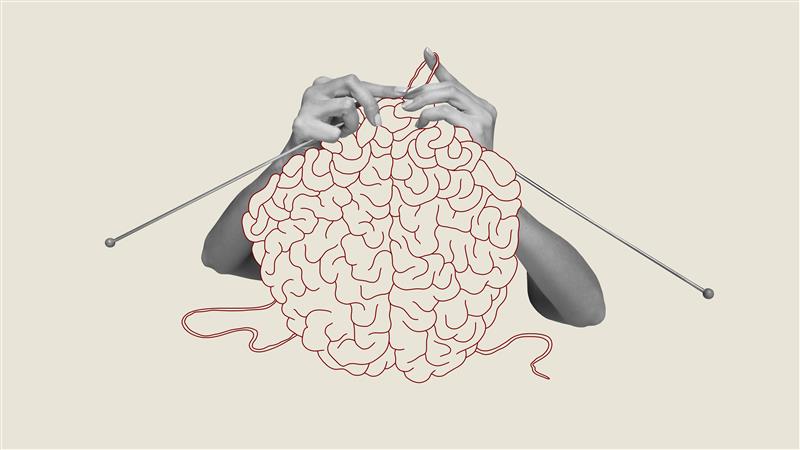
Somewhere between the fourth wearable on your wrist and the third morning supplement stack, wellness stopped feeling good. That, in a sentence, is the cultural moment we are in.
For the better part of a decade, wellness was defined by quantification and maximization. Sleep had to be scored. Glucose had to be graphed. Biological age had to be measured and, ideally, reversed. The biohacking movement — driven by longevity influencers, Silicon Valley self-experimenters, and a supplement industry now valued at roughly $24.5 billion globally — promised that if you tracked enough variables and optimized enough inputs, the human body could be engineered toward something approaching perfection.
The backlash was not sudden. It built quietly, and now it is loud. The Global Wellness Summit’s 2026 Future of Wellness report — the longest-running wellness forecast of its kind — named the over-optimization backlash one of its defining trends of the year, noting that powerful new desires for no-tech, deeply human, social, and emotional wellness are raging alongside the continued growth of high-tech medical approaches. In other words: both things are true at once, and they are in direct tension with each other.
The Wearable That Broke the Sleeper
Perhaps the most clinically documented cost of the optimization era is what happens when people bring the quantified self to bed.
Sleep tracking was supposed to improve rest. In practice, for a significant number of users, it has done the opposite. The term “orthosomnia” — coined by researchers Baron and colleagues and now entering mainstream sleep medicine literature — describes the sleep anxiety and hypervigilance that arise specifically in response to wearable sleep feedback. Patients become preoccupied with achieving a higher sleep score, ruminate over poor readings, and compound the very dysfunction the device was meant to address.
CHEST Physician’s clinical review notes that wearable sleep trackers use proprietary algorithms that are rarely disclosed or standardized, that software updates can alter sleep scoring without warning, and that performance studies have primarily involved young, healthy, predominantly white participants — limiting the validity of those scores for the majority of actual users. Yet the number on the screen carries enormous psychological weight. A bad sleep score sets the tone for the day before the day has started. That is not wellness. That is a new form of health anxiety wearing a wellness costume.
The same dynamic plays out across categories. Continuous glucose monitors — designed for people with diabetes — have migrated into the mainstream wellness market as tools for metabolic optimization. But for users without metabolic pathology, the experience of watching glucose fluctuations in real time often produces anxiety rather than insight, and dietary restriction driven by data rather than hunger signals. Health clinicians increasingly flag a related pattern with food tracking apps and calorie-counting tools: what begins as awareness frequently slides into obsessive monitoring, and for vulnerable individuals, into disordered eating.
What the Backlash Looks Like in Practice
Scream circles and somatic release classes are going viral on TikTok. Low-stimulation retreats — deliberately sparse environments designed to reduce sensory overload — are filling waiting lists. Pleasure-forward food, eating for joy rather than metabolic performance, is having a cultural moment large enough to register in Forbes, Elle, and Prevention. These are not marginal phenomena. They represent a systematic repudiation of the “more, harder, better” logic that governed wellness culture through the early 2020s.
Somatic practices — body-centered therapeutic approaches that work with physical sensation, breath, and movement to process stress and trauma — have moved from fringe therapy rooms into mainstream fitness studios and corporate wellness programs. The framework draws on polyvagal theory and trauma-informed care, both of which have spent years in clinical and academic literature and are now filtering into public consciousness through social media. The core principle is simple: you cannot out-supplement, out-fitness, or out-discipline a dysregulated nervous system. And no wearable can regulate it for you.
Breathwork, group sound baths, and somatic movement classes share a common mechanism: they are not additive interventions that ask the body to perform. They are subtractive — they create conditions for the nervous system to downregulate, to shift from the sympathetic fight-or-flight state that chronic optimization culture sustains into something closer to rest, safety, and social engagement. Physiologically, this means reduced cortisol, improved heart rate variability, and enhanced parasympathetic tone. Experientially, it means feeling, for the first time in a while, like a body rather than a biometric profile.
The New Vocabulary of Wellness
The language of the emerging counter-movement is telling. Where the optimization era spoke in metrics — VO₂ max, HRV scores, NAD⁺ levels, biological age — the new wellness vocabulary speaks in felt experience: safety, connection, regulation, pleasure, ease. These are not the words of a performance framework. They are the words of a relational one.
Social saunas are replacing solo ice baths. Group breathwork sessions are replacing individual optimization protocols. Cooking for pleasure — without calculating macros, without guilt, without a therapeutic objective — is being reframed as a legitimate and meaningful act of self-care. The communal and the sensory are displacing the solitary and the quantified.
This shift shows up in what is no longer trending as much as in what is. Cold plunge content, once dominant on wellness-adjacent social media, has given ground to videos of people lying on the floor doing nothing in particular — specifically, doing nothing in a structured, intentional, nervous-system-aware way. The joke practically writes itself, but the underlying instinct is sound: rest is not the absence of optimization. It is its own competency, and one that the previous decade of wellness culture treated as a weakness.
The Limits of the Counter-Movement
It would be easy to romanticize the backlash and misread it as a rejection of science. It is not. The neuroscience underpinning somatic practices, breathwork, and nervous system regulation is genuine and growing. Research into polyvagal theory, vagal nerve stimulation, and the psychophysiology of safety and connection represents serious science, not feel-good pseudoscience dressed in new language.
The backlash is also not a rejection of technology per se. Most people participating in the counter-movement still carry smartphones. Many still wear fitness trackers. What they are rejecting is a specific cultural use of technology — as a morality system, in which a sleep score becomes a verdict on your worth, a glucose spike becomes a referendum on your discipline, and your biological age becomes a number to be ashamed of. Technology in service of self-knowledge is a different proposition from technology in service of relentless self-improvement. The first can be liberating. The second, it turns out, can be exhausting.
What This Means
The over-optimization backlash is best understood not as a rejection of wellness but as a maturation of it. The first wave of modern wellness democratized access to health data. The second wave is learning, sometimes painfully, what to do with the anxiety that data creates.
Wellbeing, as the Global Wellness Summit’s 2026 report frames it, has shifted from something we feel to something we perform correctly — and that is the problem the current moment is trying to correct. Healing is physiological, not only cognitive. The body does not become well through being perfectly monitored. It becomes well through being adequately safe, sufficiently connected, and occasionally, mercifully, left alone.
That is, in the end, a more complete picture of what health actually is. The biohacking era narrowed the definition. The current moment is expanding it again — back toward something older, messier, and considerably more human.
Sources
- Global Wellness Summit. Future of Wellness 2026 Report. Released January 27, 2026. Available at: https://www.globalwellnesssummit.com/2026trends/
- PR Newswire. Global Wellness Summit Releases 10 Wellness Trends for 2026. January 27, 2026. Available at: https://www.prnewswire.com/news-releases/global-wellness-summit-releases-10-wellness-trends-for-2026-302670771.html
- BeautyMatter. The Future of Wellness 2026 Trends Report Key Takeaways. February 2026. Available at: https://beautymatter.com/articles/the-future-of-wellness-2026-trends-report-key-takeaways
- CHEST Physician. Using consumer sleep trackers in clinical practice. October 2025. Available at: https://www.chestphysician.org/consumer-sleep-trackers-in-clinical-practice/
- Baron KG, Abbott S, Jao N, Manalo N, Mullen R. Orthosomnia: are some patients taking the quantified self too far? J Clin Sleep Med. 2017;13(2):351–354. doi:10.5664/jcsm.6472
- Jahrami H, Trabelsi K, Husain W. Prevalence of Orthosomnia in a General Population Sample: A Cross-Sectional Study. Brain Sci. 2024;14(11):1123. doi:10.3390/brainsci14111123
- Grand View Research. Biohacking Market Size & Share Report, 2030. Available at: https://www.grandviewresearch.com/industry-analysis/biohacking-market
- Global Wellness Institute. Press Release: Future of Wellness 2026. Available at: https://globalwellnessinstitute.org/press-room/press-releases/global-wellness-summit-releases-10-wellness-trends-for-2026/
- The Good Trade. What Wellness Trends Are In For 2026. January 7, 2026. Available at: https://www.thegoodtrade.com/features/wellness-trends-2026/
- OurHealtho. Health Insight: Feb 15, 2026 — AI Wearables and the Anxiety of the Algorithm. February 15, 2026. Available at: https://ourhealtho.com/health-insight-feb-15-2026/
Discover more from Doctor Trusted
Subscribe to get the latest posts sent to your email.