
AI is increasingly being seen as a transformative solution to many of the industry’s most pressing challenges. One company making significant strides in this area is Suki, a health-tech company focused on using AI to ease administrative burdens and improve clinician productivity. With a new $70 million in funding and the announcement of essential partnerships, Suki is poised to further develop its suite of AI-driven tools, which promise to revolutionize how healthcare professionals manage their administrative workloads and, in turn, enhance patient care.
“The biggest public health crisis in the world today is the shortage of clinicians, doctors, nurses, MAs, and PAs. By bringing together speech, language models, and consumer-grade UI, we’re building a new kind of AI assistant that will be used by clinicians across the world to deliver health care effectively.”
Punit Soni, CEO of Suki
A Vision for Seamless Healthcare Technology
Founded with the mission to make healthcare technology invisible and assistive, Suki is developing AI programs that integrate seamlessly with existing health systems and EHR. By streamlining routine tasks, Suki aims to eliminate the often-overwhelming administrative burden that leads to clinician burnout—a problem that has long plagued the healthcare industry.
Punit Soni, founder and CEO of Suki, expressed confidence in the company’s new growth phase, emphasizing that the healthcare industry is “clamoring for AI.” The funding boost, which brings Suki’s total capital raised to $165 million, will be directed towards expanding the company’s leadership team and accelerating the development of two key products: Suki Assistant and the Suki Platform.
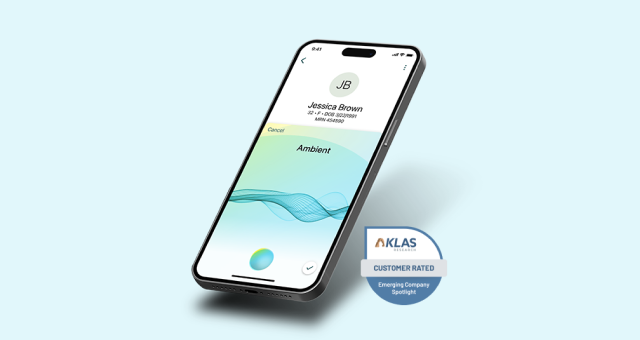
- Suki Assistant is an AI tool that helps clinicians with everyday administrative tasks, particularly EHR documentation. By automating these tasks, clinicians can focus more on patient care and less on time-consuming paperwork.
- Suki Platform provides developers with a suite of tools to build and integrate their own AI solutions into healthcare systems, expanding the capabilities of Suki’s technology across a broader range of platforms and services.
AI as a Solution to Clinician Burnout
Clinician burnout has been an ongoing issue in healthcare, exacerbated by the growing demands of documentation and other administrative tasks. A 2021 study by the American Academy of Family Physicians (AAFP) highlighted this issue, noting that family doctors were spending hours each week on documentation—time that could have been spent with patients. The AAFP Innovation Laboratory explored the use of voice-activated AI to reduce these administrative burdens and found that the technology resulted in significant time savings, boosting clinician satisfaction and improving the efficiency of medical practices.
According to the study, physicians using AI assistants, similar to consumer platforms like Siri or Alexa, saved an average of 3.3 hours per week. These voice-enabled AI assistants allowed doctors to dictate their notes and interact with their EHR systems without needing to directly engage with the technology. This hands-free approach was praised as a “breakthrough” by many participants and was included in the AAFP’s 2023 “Guide to Relieving Administrative Burden.” With Suki’s AI tools, clinicians can significantly reduce the time spent on documentation, creating a more efficient and less stressful workflow.
New Partnerships and Industry Expansion
Suki’s $70 million funding round is a significant milestone, but its impact is amplified by its growing network of strategic partnerships with some of the largest names in healthcare technology. This fall, the company announced partnerships with leading healthcare and EHR providers, including Epic, Oracle Cerner, Meditech, and Athena, along with MedStar Health, one of the most important healthcare systems in the U.S. with over 300 care locations.
MedStar Health, in particular, has played a critical role in helping Suki develop and refine its AI-driven solutions. The collaboration has resulted in an innovative, bidirectional integration with EHR systems that operates seamlessly behind the scenes. MedStar Health uses Oracle Cerner for its EHR, and clinicians across various specialties, including primary care, cardiology, gastroenterology, and urgent care, will benefit from Suki’s tools.
Jeff Collins, Vice President of the MedStar Institute for Innovation Business Innovation Lab, emphasized the importance of this collaboration, highlighting that Suki’s AI tools have improved clinician efficiency, enhanced patient experience, and bolstered professional satisfaction. The partnership has also been crucial in refining Suki’s ability to integrate with existing workflows and technology, ensuring that the AI tools do not disrupt but instead enhance daily operations.
Collins remarked, “Together, we have delivered new value to our system through successful pilot exploration, workflow optimization, and continued co-development.” The goal is clear: reduce the time clinicians spend on administrative work and allow them to focus more on patient care.
A Promising Future
The implications of Suki’s AI solutions are far-reaching. By addressing the root causes of clinician burnout—namely, the overwhelming administrative workload—Suki’s technology has the potential to improve the quality of care and clinician satisfaction across the industry. In turn, this could lead to better patient outcomes, as doctors will be able to dedicate more time to their patients rather than dealing with documentation and other administrative tasks.
With the backing of major investors such as Hedosophia, Venrock, and March Capital, along with a growing network of health system partnerships, Suki is well-positioned for continued success. As the company enters this new phase of growth, it will be interesting to see how its tools continue to evolve and how they will shape the future of healthcare technology.
As Punit Soni aptly put it, “We are in a new phase of growth.” And with that growth comes the promise of a more efficient, more humane healthcare system, where the technology fades into the background and the focus returns to what matters most—patient care.
Industry Reactions
The investment and partnerships have been met with optimism from various sectors of the healthcare industry. The company’s focus on improving clinician workflows and enhancing EHR interoperability is viewed as a critical step forward. Healthcare professionals, administrators, and industry leaders alike are eager to see how Suki’s AI tools will continue to alleviate administrative burdens, ultimately improving the healthcare experience for all involved.
The push toward AI in healthcare is more than just a trend—it’s becoming a necessity. As more health systems, like MedStar Health, begin to integrate AI solutions, the healthcare industry as a whole is poised for a technological transformation that could redefine the way care is delivered.
Suki’s success could very well mark a pivotal moment in healthcare’s digital evolution, one that alleviates the stress on clinicians while simultaneously improving patient outcomes. The future of healthcare is undoubtedly smart, efficient, and driven by AI, and Suki is leading the charge.
***Suki is a health-tech company focused on combating clinician burnout by reducing administrative burdens through innovative AI solutions. With more than 50% of physicians reporting burnout due to overwhelming paperwork, Suki’s mission is to make healthcare technology invisible and assistive, enabling clinicians to spend more time with patients. The company envisions AI as a transformative force in healthcare, starting with an assistive layer that integrates seamlessly with existing technology, offering enhanced capabilities and medical context to redefine the role of AI in the healthcare industry.
Discover more from Doctor Trusted
Subscribe to get the latest posts sent to your email.