
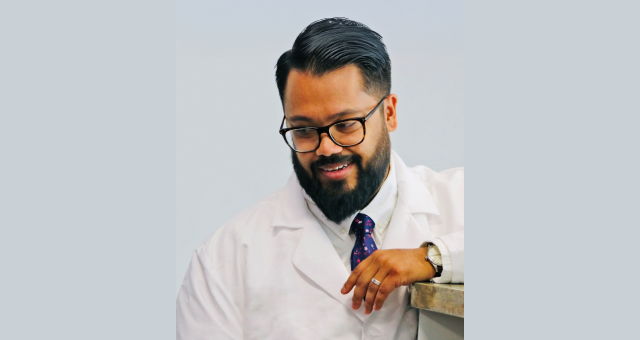
Finding His Calling
Can you tell us about your journey into podiatry and what inspired you to pursue this specialty?
I always knew I wanted to go into medicine, but which specialty? I didn’t know. What I realized is that no matter what, I needed to do something hands-on—otherwise, just reviewing lab values, imaging, and EKGs would not fulfill me. Podiatry came along and offered me a happy marriage of both worlds.
How did your residency at NewYork Presbyterian Brooklyn Methodist Hospital shape your approach to patient care, especially in pediatrics?
At my residency, patient care standards and bedside manners were stressed upon. I also worked closely with pediatric orthopedic surgeons, which taught me that kids need to be approached in a different manner, need to be spoken to in a different way, and treated such that their young minds and bodies retained limitless potential for the future post-treatment or operation.
Building a Practice with Purpose
What motivated you to open your own practice in Queens and Brooklyn?
I knew that the model of podiatric care needed to be tweaked from what already practicing providers were offering. I knew that I wanted full autonomy to shape my practice in my own view, and I wouldn’t be able to do so if I joined somewhere as an associate. Furthermore, Queens and Brooklyn offered the key demographics I wanted to target, as those were the areas I saw lacking in quality podiatric care. And in my humble opinion, Queens and Brooklyn host the most diverse populations out of the five boroughs.
The Silent Epidemic: Pediatric Flat Foot Deformity
You emphasize pediatric flat foot deformity as an often overlooked issue. Can you explain why early detection and treatment are so crucial?
Early detection and treatment are crucial simply because an oversight of this condition sets the patient up for catastrophic ailments in the future. A flat foot can progress into advanced stages and cause a multitude of biomechanical conditions that affect ankles, knees, hips, and spine as the child grows up. In just their childhood, flat feet can cause discomfort or pain when running, weight-bearing, or engaging in physical activities. This pain demotivates children from being active and thus steers them to lives of lethargy, increased screen time, and childhood obesity.
How does untreated flat foot deformity impact long-term health beyond the feet, such as knees, hips, and spine?
Ultimately, it causes osteoarthritis of these joints. The flat feet initially lead to malalignment of these joints as they are not balanced or centered, and as these joints compensate for years of adulthood, the cartilage wears out at an accelerated rate, leading to arthritic pain, stiffness, and loss of range of motion.
A Marathon Victory
Can you share a patient story where early intervention made a significant difference in their mobility or quality of life?
I had a 23-year-old young man who has been running marathons all his life. It’s something that his father and brothers partake in as well. Now, his ultimate goal was to complete the NYC marathon, a grueling 26.2 miles. He had conquered the half marathon, but the full one was his Mount Everest. He has been training for it; however, he couldn’t improve on his time. He kept getting cramps in his calves, which further strained him and stole his stamina.
Upon evaluation, he was noted to have flat feet and concurrently tightened Achilles tendons. The excessive strain from this combination was adding excessive load and strain to his calves, thus causing him to cramp after just a few miles. We worked together to devise a treatment plan with physical therapists who specialized in sports injuries, optimized his hydration and nutrition, and designed a low-profile custom foot orthosis for his running shoes (he was a huge ASICS fan). With dedication, patience, and a brand new cadence, his patient was able to complete the NYC marathon and earn that medal.
Serving the Most Vulnerable
You provide podiatric services to asylum-seeking refugees and in schools. What unique challenges and rewards have you experienced in these settings?
The challenges would be to witness the arduous journey these people risked in order to get to the USA. Not only their voices but also their feet screamed of the rough terrain they traversed, the waterlogged shoes that peeled off their skin, ankle sprains, and plantar fasciitis from the miles-long path they climbed, often barefoot just to get there.
The rewards are to be able to address these ailments of the feet and provide relief to those who assume they are cut off from medical services. It’s wonderful to be able to get the parents back on their feet so they can go out and work towards achieving the American dream for their children.
How do you adapt care for children and adolescents in temporary lodging centers or underserved communities?
I focus first on breaking any language barrier by having translation services or in-person translators present. If patients cannot freely speak to you, they won’t open up. This comfort breaks a lot of barriers. Then it’s an approach where I drown them in kindness, as they are used to being neglected, rushed through a doctor’s visit, or spoken over. And finally, instead of leaving them with open referrals, unsure medications, I directly establish nearby pharmacies, physical therapists that are close by, imaging centers nearby for X-rays, and so on. The goal is to give them pointed directions on where to go, who to see, and how to get medications as needed.
Education and Prevention
What strategies or programs do you implement to educate parents and children about proper foot care and preventive measures?
I hold foot screenings, perform biomechanical exams, and incorporate scanning metrics of patients’ feet to identify pressure points, malalignment, and connect with pediatricians to gauge childhood conditions.
How do you approach treating acute versus chronic foot conditions while ensuring preventive measures are in place?
When it comes to acute conditions, my focus is to decrease pain and discomfort immediately and protect the feet from any further damage. For chronic conditions, it is paramount to address changes in lifestyle, activity, and shoewear so as to retain as much functionality as possible and slow down wear and tear.
Teaching the Next Generation
You mentor over 40 residents and collaborate with multiple residency programs. What do you emphasize to the next generation of podiatrists about preventive care?
I just try to press onto one singular thought: rather than treat the problem when it has become devastating, try to identify it early on and nip it in the bud. Older medicine focuses on treating the acute, and that is just not optimal. Why not just stop the pathology early on?
How do you balance mentoring future podiatrists with patient care and running your practice?
It is an extremely difficult act to juggle. The nights are long, the mornings are early, but I would say even more than coffee, succeeding in teaching a resident surgical techniques, while alleviating a patient’s pain or concern, and keeping the practice profitable, rejuvenates you like no other.
The Forgotten Foundation
Foot health is often neglected in both children and adults. What are the most common mistakes people make that lead to long-term problems?
Honestly, I believe it’s a matter of proximity. In terms of our body and priority, the farther an anatomy is from the head, the less vigilant we are about it. Our feet, for example, are locked away in shoes and socks all day. Thus, out of sight, out of mind. It’s only when a sharp pain stops us in our tracks do we tend to our feet. So much of our day-to-day depends on our ability to get around that it is absolutely crucial to mind our toes.
What advice would you give to parents to ensure their children develop healthy feet and avoid chronic issues later in life?
Trust your instinct. I’ve seen many parents express concern about their children’s feet, but, at the advice of a friend, family, or pediatrician, they decide to subdue their concern. As podiatrists, we are experts in diagnosing and treating children. Sure, there is a window where some anatomical variance is normal, but this shouldn’t last outside of accepted age ranges. When in doubt, come in for an evaluation and let’s figure it out together.
Discover more from Doctor Trusted
Subscribe to get the latest posts sent to your email.