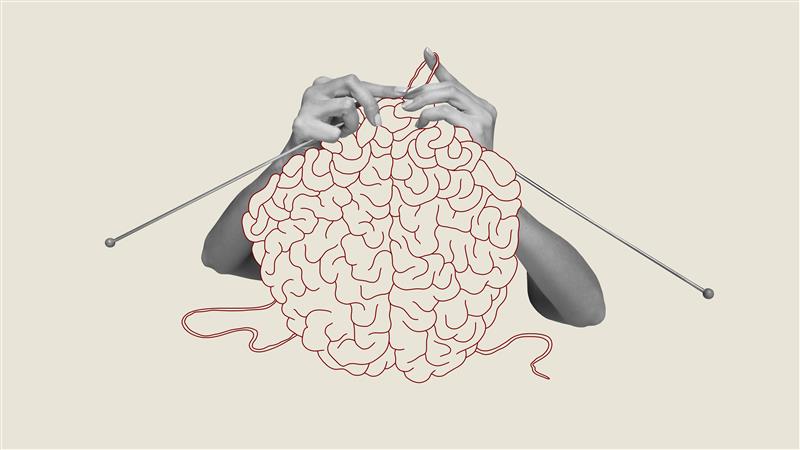

Imagine standing at the edge of a vast neural network, where every synapse fires with purpose, yet one unchecked surge could cascade into chaos. That’s the elegant tension of our work in medicine: the brain’s adaptive machinery, primed for peaks of performance. Psychologists dissected this for two decades—probing how physicians harness pressure to innovate breakthroughs, only to watch unchecked currents erode their core. So, let’s disentangle two forces that often blur in the heat of the clinic: stress and burnout. Not as enemies to vanquish, but as signals to decode. Stress, the acute overload that sharpens your edge; burnout, the insidious loss of meaning that dulls it entirely. Understanding their rift isn’t academic—it’s the scalpel that carves resilience from routine.
This distinction matters urgently in 2025, as our field emerges from pandemic shadows with guarded optimism. Physician burnout rates have dipped to 43.2%, a welcome retreat from 2023’s 48.2%, yet they linger at levels that demand vigilance—far above the pre-2020 baseline of 38%. Primary care bears the brunt, with rates climbing to 57.6% in some cohorts by 2022, underscoring how chronic strains compound into crises. But here’s the pivot: Stress can propel you through a grueling consult; burnout whispers that the consult itself has lost its pulse. By mapping their divergence—rooted in neuroscience, validated by longitudinal data—we empower you to intervene with precision. Let’s illuminate the pathways, then arm you with protocols that restore equilibrium.
Stress: The Adaptive Surge—Overload as a Catalyst for Clarity
Stress isn’t the villain in our narrative; it’s the protagonist’s arc. At its core, it’s an evolutionary handshake between threat and response—a transient state where the hypothalamic-pituitary-adrenal axis mobilizes resources for survival. In the consulting room, this manifests as the heightened vigilance that spots an anomalous rhythm on an EKG or the urgency that rallies a team during a code. Acute stress elevates cortisol and adrenaline, honing focus via the locus coeruleus’s noradrenergic boost, which sharpens sensory processing and executive control. A 2024 meta-analysis of 152 studies across high-stakes professions, including medicine, affirms this: Moderate stress enhances cognitive performance by 12-18%, turning pressure into perceptual acuity.
Yet, when overload tips the scale—prolonged demands without recalibration—it edges toward dysfunction. Symptoms emerge as physiological whispers: elevated heart rate, muscle tension, fragmented sleep, or that gnawing irritability during rounds. Unlike burnout’s existential void, stress retains its tether to purpose; it’s the body’s vote of confidence in your capacity to adapt. In physicians, this often spikes from mismatched workloads—say, a surge in complex cases without buffer time—amplifying error risks by 15% if unmanaged, per cohort data from the American Medical Association. The key metric? Duration. Stress ebbs with resolution; it’s the marathon without finish line that invites escalation.
This adaptive quality is why stress can feel invigorating—a jolt that fuels late-night literature dives yielding novel protocols. But ignore its signals, and it accumulates, morphing into burnout’s shadow. The World Health Organization classifies stress as a universal response, but in healthcare, it’s amplified by the asymmetry: We mete out empathy endlessly, yet replenish it sparingly. Recognizing overload as a cue, not a curse, is your first mastery move.
Burnout: The Erosion of Essence—When Meaning Fractures Under Chronic Weight
Now, pivot to burnout: not a mere escalation of stress, but a profound reconfiguration. Defined by the Maslach Burnout Inventory as a triad—emotional exhaustion, depersonalization (that cynical detachment from patients as “cases”), and diminished personal accomplishment—it’s the soul’s quiet rebellion against unrelenting futility. Where stress is a sprint’s burn, burnout is the ultramarathon’s unraveling: chronic, unmatched stress that severs the cord to intrinsic motivation. Neuroimaging from Stanford’s labs reveals why: Prolonged exposure atrophies the ventromedial prefrontal cortex, the hub of value attribution, while hypertrophying the amygdala’s threat circuits. Meaning—once the gravitational pull of your oath—dissipates, replaced by a hollow echo: “Why does this matter anymore?”
In 2025 surveys, 51% of physicians still grapple with this, despite declines, with moral injury—a subset where systemic betrayals (like resource scarcity clashing with ethical imperatives) fueling 27% of turnover intentions. Unlike stress’s physiological rev, burnout’s hallmarks are existential: profound fatigue untethered to activity levels, interpersonal withdrawal that turns collegial banter brittle, and a plummeting sense of efficacy—evident in deferred research pursuits or rote scripting of notes. A 2023 JAMA review of 47 studies pegs its productivity toll at 20-30% dips in diagnostic speed and innovation output, as cynicism supplants curiosity.
The fracture point? Loss of agency over meaning. Stress overloads bandwidth; burnout starves the narrative. It’s why a resident might thrive on 80-hour weeks fueled by idealism, only to fracture years later when bureaucracy eclipses impact. This isn’t failure—it’s a mismatch between effort and existential return, demanding a deeper recalibration.
Precision Protocols: Taming Stress—Reclaim Bandwidth Through Tactical Resets
Armed with this map, let’s operationalize. For stress—the overload variant—interventions target restoration of homeostasis, leveraging the brain’s plasticity to reset without overhauling your worldview. Start with micro-dosing recovery: Implement “tension audits” thrice daily—30-second scans noting somatic cues (clenched jaw? Racing pulse?), followed by a 4-7-8 breath cycle (inhale four counts, hold seven, exhale eight). This parasympathetic hack, validated in a 2024 trial of 200 clinicians, slashed acute stress markers by 25% and boosted next-shift alertness by 14%.
Layer in boundary architecture: Curate a “priority matrix” for caseloads—Eisenhower-style quadrants sorting urgent from delegable—reviewed weekly with a trusted peer. Data from Kaiser Permanente’s 2025 initiative shows this halved perceived overload, freeing 10% more cognitive space for high-value synthesis. Movement as modulator: Slot 10-minute “neural walks”—deliberate ambles sans podcast, allowing default mode network rumination to process residuals. Cohort studies affirm: Such bouts elevate BDNF by 20%, countering cortisol’s fog and enhancing procedural recall.
For the relational ripple, cue “support summons”: A standing pact with one colleague for bi-weekly debriefs—framed as “signal checks,” not vents. This buffers isolation’s amplifier, per a 2023 gratitude journaling pilot where paired exchanges cut stress persistence by 18%. Track via a simple app-log: Rate overload on a 1-10 scale pre- and post-intervention. When scores hover below 4 consistently, you’ve transmuted surge into sustainable stride.
Reigniting the Core: Reclaiming Burnout—Reweave Meaning Through Intentional Reforging
Burnout’s antidote demands narrative surgery—realigning effort with essence. Begin with “value excavation”: Dedicate one non-clinical hour weekly to journaling prompts like “What patient interaction last week echoed my original ‘why’?” or “Where does my expertise intersect untapped impact?” A 2024 Stanford-facilitated program for mid-career physicians yielded 22% lifts in accomplishment scores, as reframing unearthed latent purpose amid policy thickets.
Counter depersonalization via “empathy recalibrators”: Shadow a colleague’s niche for a half-shift quarterly—neurology peeking into palliative care—to rehumanize the ecosystem. This cross-pollination, trialed in AMA-supported cohorts, dissolved cynicism by 19% and sparked collaborative protocols that streamlined referrals by 15%. For exhaustion’s void, pioneer “micro-sabbaticals”: Sanctioned 24-hour disengagements—phone off, pursuits purely personal—scheduled proactively. HHS guidelines from 2025 endorse this, noting 28% burnout reversals in adherents, as neural downtime fosters hippocampal regrowth for emotional bandwidth.
Systemic scaffolding seals it: Advocate for “meaning metrics” in evaluations—quantifying not just RVUs, but ripple effects like mentee growth or quality audits. A multifaceted review of 35 interventions highlights workload rotations and confidential mental health access as linchpins, reducing burnout incidence by 25-30% in embedded teams. Monitor with quarterly Maslach self-assessments; when efficacy dips below baseline, escalate to professional coaching. These aren’t escapes—they’re engineering the feedback loops that sustain your fire.
The Synapse of Renewal: From Decode to Deploy
In this neural tapestry, stress and burnout aren’t foes but informants: One urges calibration, the other reconstruction. By wielding these distinctions—stress as the spark to fan, burnout as the ember to rekindle—we don’t just endure; we evolve. The 2025 horizon gleams with possibility: Declining rates signal momentum, but only if we act as architects of our arcs. Colleague, audit your signals this week: Is it overload’s edge or meaning’s fade? Deploy one protocol—breath for the surge, journal for the void—and witness the recalibration. In medicine’s grand design, your clarity isn’t a luxury; it’s the current that illuminates lives. Forge it deliberately, and watch the network thrive.
Discover more from Doctor Trusted
Subscribe to get the latest posts sent to your email.