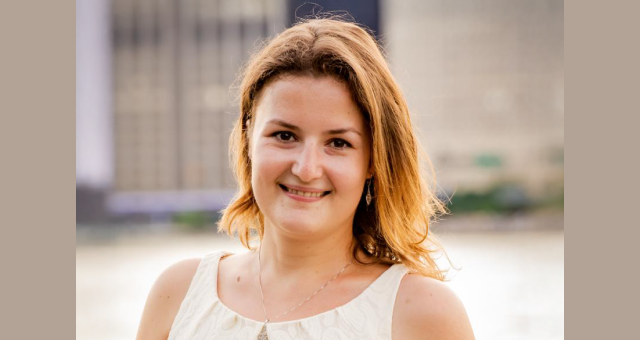
Today, we are speaking with Dr. Romanna Volosyanko, OD, an optometrist practicing in one of New York City’s most dynamic and diverse neighborhoods—Brooklyn. Dr. Volosyanko graduated cum laude with a degree in Biology and has journeyed from volunteering at a local optometry clinic to becoming a specialist who helps patients of all ages and professions care for their eye health every day. In this interview, we’ll discuss what it’s like working as an optometrist in a major city, the most common myths about vision, and why regular eye exams are important even for those who see perfectly well.
Can you tell us about your journey into the profession: what inspired you to become an optometrist, and how you pursued your education?
My journey to optometry began with a fascination for how vision impacts every aspect of our lives. My own experience of wearing glasses inspired me to pursue a career in optometry. I realized early on that clear vision is something many people take for granted until they experience challenges with it. I started by focusing on science classes in high school and college, and volunteered at a local optometry clinic. There, I learned the attention to detail this profession requires and witnessed firsthand how proper eye care can transform someone’s quality of life. In college, I graduated cum laude in Biology, where I received a strong foundation in anatomy and physiology, before being accepted into the optometry program.
You practice in Brooklyn, New York—how does the unique vibe of this borough influence your work and the patients you see?
The unique vibe of Brooklyn has certainly put an emphasis on individualized care. I work with people from an incredible mix of backgrounds, experiences, and lifestyles in this fast-paced community. My patients have shaped my work style into something dynamic and people-centered. I see patients who spend many hours on computer screens, creative professionals who care deeply about comfort and style, and families who want quality care close to home. Brooklyn’s diversity means I’m constantly learning about different visual needs and lifestyle demands. No two days, or patients, are ever the same in my office, and that’s what keeps this work exciting and meaningful.
What are the main services you offer? What do you think sets your clinic apart?
I provide comprehensive eye care for the entire family—from routine exams and contact lens fittings to the diagnosis and management of conditions such as dry eye, glaucoma, cataracts, macular degeneration, and more. What sets the clinic apart is the personal attention each patient receives. Brooklyn is a fast-paced borough, but inside our office, time slows down. I take time to explain eye health in terms that make sense to each individual and answer questions that are tailored to their personal life and concerns. My goal is for every visit to feel both thorough and genuine—patients should never feel rushed or like just another appointment on the schedule.
How do you approach personalized patient care? Could you share an example from your practice?
Personalized care begins with listening. Every patient’s eyes—and life—are different, so I take time to understand not only their vision needs but also how they live and work. Whether a patient spends hours staring at screens, drives for a living, does creative work, or works in healthcare, I tailor recommendations to fit their unique world. Each profession and lifestyle has different visual demands, and the solutions should reflect that. My goal is to ensure patients are well-informed about their eye health. That means discussing options openly, explaining the pros and cons of different approaches, and working together as a team to find the best long-term solutions. It’s not just about seeing clearly—it’s about helping each person live their life comfortably and confidently with optimal vision.
How do you manage ocular diseases in your practice? Are there any cases that particularly stand out to you?
We use diagnostic technology to detect and monitor conditions such as glaucoma, diabetic retinopathy, and macular degeneration as early as possible. Early detection is truly key to preserving vision. I take a proactive approach—combining medical management with patient education so people understand what’s happening with their eyes and how to protect their vision long-term. What stands out most are cases where early detection made a real difference in someone’s life. Patients come in for what they think is a routine exam, and we discover early signs of glaucoma, diabetic retinopathy, or even indicators that suggest the possibility of stroke. These moments remind me why comprehensive eye exams are so critical. Catching these cases early helps patients preserve their vision and, in some instances, alerts them to systemic health issues they weren’t aware of.
What’s the most common myth about eye health that you hear from patients, and how do you debunk it?
On a daily basis, I hear the most common myth: “I’m seeing clearly, so my eyes are healthy.” In reality, many serious eye conditions can progress silently without affecting vision at first. That’s why regular comprehensive eye exams are so important, even if patients don’t feel any symptoms or notice changes in their vision. I often explain that an eye exam isn’t just about prescribing glasses to help you see better—it’s a comprehensive health check and a window into your overall eye health. We examine the internal structures of the eye, check for signs of disease, and assess how well everything is functioning, far beyond just measuring visual acuity.
What challenges does the optometry profession face today, especially in the post-pandemic era?
One of the biggest challenges optometry faces today is the increasing demand for comprehensive eye care in a world where people’s visual habits have changed dramatically. Since the pandemic, screen time has skyrocketed—people spend many more hours on digital devices for work, entertainment, and staying connected, leading to higher rates of eye strain, dry eye, and myopia progression, especially in children. At the same time, the post-pandemic era has highlighted the critical importance of quality care. People want efficiency and convenience, but they also need thorough, personalized exams that go beyond online vision tests. We’re finding new ways to offer that balance—through technology, flexible scheduling, and patient education—without losing the human connection that defines good eye care. Optometry is evolving rapidly, and fortunately, we have incredible tools and knowledge to detect diseases early and keep patients seeing their best for years to come.
How do you select glasses and lenses for patients? Do you factor in their lifestyle or personal preferences?
Choosing the right eyewear for each person is truly a personalized process. I start by learning about the patient’s lifestyle—how they use their eyes daily, what kind of work they do, and what visual challenges they face. From there, I recommend lens options that best fit their needs, whether it’s blue-light protection for prolonged screen time or special coatings for outdoor activities. Some patients prefer contact lens fittings that work best with their daily life—from sports enthusiasts who need the freedom of movement to surgical residents who prefer the lighter way of seeing in the OR. Style is always an important part of the equation too—I love helping patients find frames that not only fit their prescription and face shape but also reflect their personality and make them feel confident. Eyewear is something you wear every day, so it should feel like an extension of who you are.
Tell us about working with patients of different ages: are there differences in your approach for children, adults, and seniors?
Eye care looks different at every age, so my approach depends on the patient’s stage of life and their specific needs. With children, it’s important to make the experience fun, engaging, and comfortable—building trust, using age-appropriate language, and ensuring they understand every step of the process. For adults, I focus on preventing digital eye strain and maintaining long-term eye health. For seniors, I prioritize monitoring age-related changes such as cataracts, glaucoma, and macular degeneration, while working to keep their vision clear and functional for daily life and maintaining their independence.
What do you love most about your job, and why would you recommend optometry as a career to someone considering it?
My job is truly both deeply scientific and deeply personal. Vision affects every second of someone’s life—how they work, learn, connect with loved ones, and experience the world around them. Helping patients see more clearly and comfortably is incredibly rewarding. I love the long-term relationships that come with the profession—I get to care for patients over the years, sometimes across generations. For anyone considering optometry as a career, I’d say it’s a perfect balance of medicine, problem-solving, and human connection. You make a tangible difference in people’s quality of life every single day, and you never stop learning as technology and research evolve. It’s truly a career that gives back in many ways. You become a part of people’s milestones, from a child’s first eye exam to helping seniors maintain their independence.
Discover more from Doctor Trusted
Subscribe to get the latest posts sent to your email.