

Imagine this: It’s a crisp Monday morning in Silicon Valley, and 62-year-old tech executive Elena V steps into a sleek Prenuvo clinic for her annual full-body MRI. She’s not there for a routine check-up. No, Elena is chasing something far more audacious—a receipt that reads “Biological Age: Reversed by 12 Years.” Last year, her epigenetic clock ticked at 58, a nagging reminder of the stress-fueled decades building her $500 million AI startup. Today, after six months of an AI-curated regimen—tweaked daily via her Apple Watch and a custom ChatGPT Health variant—it’s reading 46. Her biomarkers scream vitality: telomere length extended, inflammation markers down 40%, and DNA methylation patterns mimicking those of a mid-40s athlete. While such shifts reflect favorable biomarker dynamics rather than proven organism-wide rejuvenation, they underscore how AI is turning abstract molecular tweaks into tangible, personalized interventions.
Elena isn’t alone. In 2026, “age reversal” isn’t science fiction; it’s a burgeoning $50 billion industry, powered by AI that’s decoding the biology of aging faster than ever before. From Harvard labs resetting 80-year-old cells to 40-year-old states in a week using chemical cocktails, to emerging trials for epigenetic reprogramming, the tools to “roll back” our biological clocks are here. But as AI turns aging from an inevitable verdict into a variable, it’s not just rewriting personal destinies—it’s upending the trillion-dollar pillars of insurance, pensions, and healthcare economics. What happens when people live not just longer, but healthier longer? And who gets left behind in this race to eternal youth?
The Science of the Reset: Cracking the Code of Biological Age
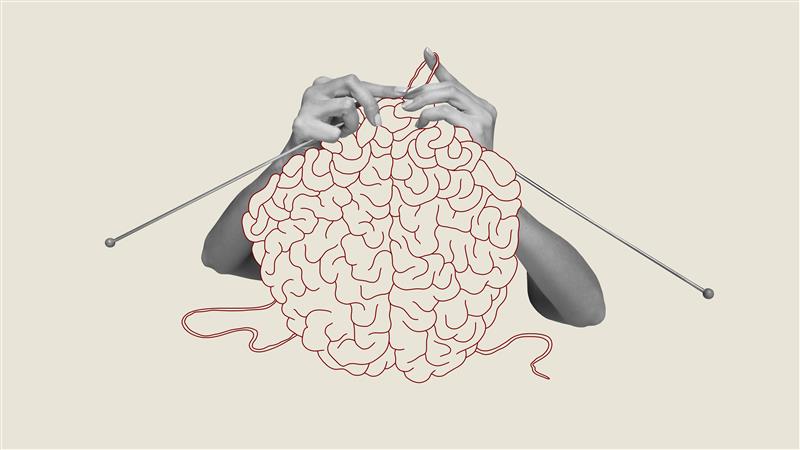
Aging isn’t a single switch flipping off; it’s a symphony of breakdowns. Telomeres shorten like frayed shoelaces, mitochondria sputter like old engines, and epigenetic marks—chemical tags on our DNA that dictate gene expression—pile up like bureaucratic red tape, silencing youth-preserving genes and amplifying chaos. For decades, scientists measured this with “chronological age”—your birthday candles. But in the 2010s, the concept of biological age emerged: a more accurate gauge of how old your body feels, based on molecular wear-and-tear.
Enter epigenetic clocks, the unsung heroes of this revolution. Pioneered by Steve Horvath in 2013, these algorithms analyze DNA methylation patterns (those epigenetic tags) across thousands of sites to predict biological age with startling precision. By 2026, second-generation clocks like GrimAge and DunedinPACE have upped the ante, forecasting not just age but risks for metabolic syndrome, cognitive decline, and even mortality—outperforming traditional markers like frailty scores. A recent Clemson study even tailored clocks for diverse populations, addressing biases that once skewed predictions for non-European groups.
Now, layer on AI, and the game changes. Deep learning models, trained on millions of samples, are building “aging clocks” that spot subtle physiological shifts invisible to the human eye. Systems like ClockBase, for instance, sift through vast datasets to identify age-modifying compounds—uncovering thousands with potential, 70% of which extended lifespan in model organisms during early validation. Gradient-boosting models now hit 94% accuracy in age prediction, edging out neural networks. And it’s not just prediction; AI is prescribing. Platforms turn your smartphone into a facial biomarker scanner, delivering real-time metabolic insights and personalized anti-aging hacks via machine learning-driven pattern recognition.
The crown jewel? Epigenetic reprogramming. Inspired by Shinya Yamanaka’s Nobel-winning factors (which reset cells to a stem-like state), partial reprogramming tweaks just enough to rewind the clock without erasing cell identity—targeting specific methylation sites to restore youthful gene expression. In mice, it’s restored vision in glaucomatous eyes; in humans, early trials are now targeting optic nerve aging with similar mechanisms. Harvard’s chemical approach—using six molecules to reset markers in a week—has already “rejuvenated” elderly human cells in vitro, boosting their resilience without genetic edits. By mid-2026, larger trials will test how these clocks respond to interventions, potentially yielding the first FDA approval for age-associated conditions, with biological age used as a secondary or exploratory endpoint.
For Elena, it’s practical: Her AI regimen blended GLP-1 agonists (like an evolved Ozempic) with senolytics (zombie-cell clearers) and microbiome tweaks, all optimized via wearable data. Six months in, her DunedinPACE score dropped by 11 years—again, a proxy for risk modulation rather than full-system reversal. “It’s like upgrading your OS without losing your files,” she says. But scaling this? That’s where the tech meets the real world—and the wallets.
The AI-Powered Longevity Stack: From Wearables to Wonder Drugs
2026’s longevity tech isn’t a monolith; it’s a stack, layered like a neural network, with AI as the conductor. At the base: Consumer tools. Full-body scans paired with AI analytics map your entire biomarker landscape—organs, blood, even gut flora—in hours, using explainable AI (XAI) to demystify predictions, flagging why your liver “ages” faster (too much late-night scrolling?).
Mid-layer: Therapeutics. The field is advancing through AI-discovered compounds and targeted interventions, from epigenetic reprogrammers to senescent cell clearance protocols. Morgan Cheatham predicts a $20 billion M&A wave in health tech this year, as Big Pharma snaps up innovators to hedge against the “longevity cliff.”
Top of the stack: Systemic interventions. AI is closing the feedback loop, learning from trials in real-time. A December 2025 AI analysis mapped a century of aging research, revealing interconnections that humans missed—like how microbiome engineering amplifies senescent cell clearance. By 2028, experts forecast human trials showing 5+ years of biomarker reversal. Immunologist Derya Unutmaz, once pegging full reversal at 2045, now eyes 2040 thanks to AI acceleration.
Yet, accuracy isn’t flawless. While deep clocks hit 94% on average, tissue-specific variations persist—liver clocks outperform brain ones by 15%. And for 32 health outcomes, adding clocks to standard risks boosts prediction by 20%, but only if calibrated for equity. In Europe, the EU AI Act mandates transparency here, ensuring models aren’t “black boxes” that discriminate. For Poles eyeing this tech, Warsaw’s burgeoning biotech scene (hello, EU-funded trials at the Mossakowski Medical Research Centre) offers a gateway—affordable scans via national health pacts could democratize access by 2027.
The Business Tremor: Longevity’s Double-Edged Sword for Insurers and Pensions
Here’s the rub: If Elena’s cohort—affluent 50-somethings—starts outliving actuarial tables by decades, the math implodes. Global longevity tech is no longer a niche; it’s a “run-rate cost of living,” per Forbes, with CES 2026 showcasing wearables that bundle reversal protocols into $200/month plans. Insurers, already reeling from P&C trends like climate risks, face a “longevity risk” tsunami. Premiums for life insurance could plummet 30% by 2030 as healthspans extend, but short-term spikes loom from upfront costs—$10,000+ for a full reversal stack.
Pensions? A structural shift. After decades of decline, 2026 marks a “return to dependable income,” with firms like Athene pushing pension risk transfers (PRTs) worth £40-50 billion. But longer lives mean longer payouts—imagine funding 40-year retirements. Brookings warns of economic ripples: immigration policies and tariffs will clash with a workforce skewed older and healthier. Businesses must adapt, offering phased retirements and AI-upskilled “silver talent,” as Aon’s Human Capital Outlook urges.
ESG investors smell opportunity: Rothschild & Co. highlights longevity as a frontier, reshaping insurance and property markets. Yet, Zurich’s global survey flags risks—geopolitical divides could widen access gaps, with the Global South locked out. In Poland, PZU insurers are piloting AI clocks for premium adjustments, but without EU-wide subsidies, it’s elite-only. The fear? A “healthspan divide”: The top 10% live to 100 vibrantly; the rest scrape by on basics.
Reality Check: What This Does NOT Yet Prove
Amid the hype, it’s crucial to ground expectations in evidence hierarchy. AI-driven clocks excel at proxy measures—tracking methylation shifts or telomere dynamics—but they don’t equate to halting organism-level aging. No intervention has demonstrated systemic rejuvenation in humans; most gains are associative, not causal, and long-term safety data is nascent. Clinical trials prioritize age-related diseases (e.g., frailty, neurodegeneration) over “aging itself,” per FDA guidelines. Over-reliance on single biomarkers risks false positives, and equity biases in training data could exacerbate disparities. In short: Promising signals, but we’re mapping the terrain, not terraforming it.
The Futuristic Twist: What If We ‘Over-Reverse’?
Picture 2040: AI errs, and Elena’s cells “overshoot”—her biological age dips to 30, but her immune system forgets decades of vaccines, or her epigenome glitches, sparking rogue growths. Senescence-reversal therapies like organ printing or microbiome hacks sound utopian, but forecasts list 15 by 2040, from radical extensions to AI guardians. Liberty Avenger warns: Survive the next decade, and reversal’s probable—but at what cost?
Ethical minefields abound. Who decides “youthful” parameters? AI biases could favor Western genomes, per second-gen clock critiques. And business? Pharma pivots to “maintenance drugs” for eternal 50-year-olds, but overpopulation strains resources. In a twist, insurers might subsidize reversal to cut long-term claims—turning fear into profit.
Your Move in the Longevity Game
2026 isn’t the end of aging; it’s the dawn of editing it. From Elena’s reset to global trials, AI’s making biological age a dial we can turn. But as businesses quake—insurers recalibrating, pensions extending, startups booming—the real question is equity. In Warsaw, with EU AI regs as a shield, Poles can lead: Invest in local biotech, demand subsidized clocks via NFZ, or even trial a “reversal passport” for cross-border care.
The clock’s ticking backward. Will you wind it? Or let the suits decide?
If you found this article valuable, our monthly newsletter goes even deeper—with exclusive compliance strategies, advanced coding guidance, and insider insights you won’t find anywhere else. Subscribe to access what matters most.
Sources
1. Hone Health. “26 Longevity Trends That Will Define 2026.” Dec 12, 2025. https://honehealth.com/edge/longevity-trends
2. Forbes. “How AI Is Rewriting The Future Of Aging.” Apr 26, 2025. https://www.forbes.com/sites/tomokoyokoi/2025/04/26/how-ai-is-rewriting-the-future-of-aging
3. Never2Late Substack. “9 Longevity Trends for 2026.” Dec 21, 2025. https://never2late.substack.com/p/9-longevity-trends-for-2026
4. ScienceDirect. “Deep aging clocks: AI-powered strategies for biological age estimation.” https://www.sciencedirect.com/science/article/pii/S1568163725002351
5. Medical Futurist. “Top Digital Health And Healthcare AI Trends To Watch In 2026.” Jan 14, 2026. https://medicalfuturist.com/top-digital-health-and-healthcare-ai-trends-to-watch-in-2026
6. A4M Blog. “AI-Driven Biological Age Estimation.” May 31, 2025. https://blog.a4m.com/ai-driven-biological-age-estimation-a-new-frontier-in-longevity-medicine
7. WeWillCure. “9 Anti-Aging and Longevity Startups to Watch in 2026.” Dec 8, 2025. https://wewillcure.com/insights/company-profiles/anti-aging-and-longevity-startups-to-watch
8. News-Medical.net. “AI analysis maps a century of global aging research.” Dec 23, 2025. https://www.news-medical.net/news/20251223/AI-analysis-maps-a-century-of-global-aging-research.aspx
9. SkinDoctor.ai. “2026: When Aging Became a Variable, Not a Verdict.” Jan 4, 2026. https://www.skindoctor.ai/post/2026-when-aging-became-a-variable-not-a-verdict
10. Stanford Medicine. “Clinical AI Has Boomed.” Jan 15, 2026. https://medicine.stanford.edu/news/current-news/standard-news/clinical-ai-has-boomed.html
11. Mass General Brigham. “Looking Ahead: Predictions for Science and Medicine in 2026.” Dec 23, 2025. https://www.massgeneralbrigham.org/en/about/newsroom/articles/2026-predictions-on-scientific-advancements
12. Clemson News. “Clemson study: Existing epigenetic clocks may not tell time correctly.” Jan 13, 2026. https://news.clemson.edu/clemson-study-existing-epigenetic-clocks-may-not-tell-time-correctly-for-some-populations
13. University of Edinburgh. “Second-generation epigenetic clocks show greater promise.” Dec 17, 2025. https://institute-genetics-cancer.ed.ac.uk/second-generation-epigenetic-clocks-show-greater-promise-for-disease-risk-prediction
14. Nature. “Biologically informed deep learning for explainable epigenetic clocks.” Jan 15, 2024. https://www.nature.com/articles/s41598-023-50495-5
15. TIME. “The Race to Measure How We Age.” Jan 16, 2026. https://time.com/collections/the-age-of-longevity/7346650/biological-age-tests-measure-aging
16. Forbes. “The Future Of Aging: Why Businesses Must Step Up.” Jan 15, 2026. https://www.forbes.com/councils/forbesbusinesscouncil/2026/01/15/the-future-of-aging-why-businesses-must-step-up
17. AllianceBernstein. “Insurance Outlook 2026.” Dec 11, 2025. https://www.alliancebernstein.com/us/en-us/defined-contribution/insights/insurance-viewpoints/insurance-outlook-2026-innovation-at-the-helm.html
18. Forbes. “Buying Longevity: The New Run Rate Of Living.” Jan 6, 2026. https://www.forbes.com/sites/josephcoughlin/2026/01/06/buying-longevity-the-new-run-rate-of-living-and-living-in-retirement
19. Aon. “2026 Human Capital Outlook.” Jan 14, 2026. https://www.aon.com/en/insights/articles/2026-human-capital-outlook-5-forces-to-act-on
20. Athene. “2026 Retirement Outlook.” https://www.athene.com/2026-retirement-outlook
21. Rothschild & Co. “Longevity and health span: a new frontier for ESG investing.” Nov 19, 2025. https://www.rothschildandco.com/en/newsroom/insights/2025/11/wm-business-with-humanity-longevity-and-health-span
22. X Post by @m_goes_distance. Jan 2, 2026.
23. X Post by @AlgomashAI. Jan 18, 2026.
24. X Post by @VraserX. Dec 15, 2025.
25. X Post by @DeryaTR_. Dec 3, 2025.
26. X Post by @4biddnKnowledge. Jan 2, 2026.
27. X Post by @rand_longevity. Jan 9, 2026.
Discover more from Doctor Trusted
Subscribe to get the latest posts sent to your email.

One thought on “Reversing Aging: How AI in 2026 is ‘Rolling Back’ the Biological Clock (and Why It Scares Business)”
Comments are closed.