
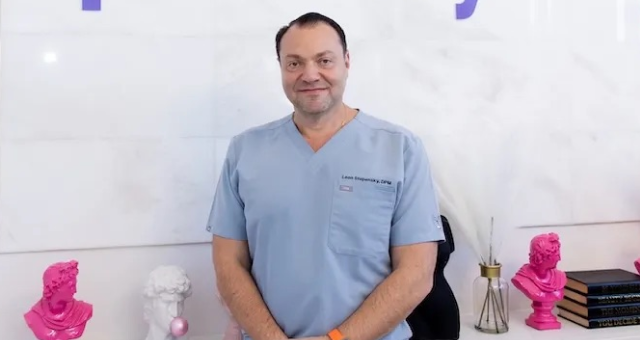
Dr. Stepensky is an experienced podiatric surgeon practicing across multiple locations, with expertise in advanced surgical techniques and emerging technologies. In this interview, he discusses the evolving landscape of podiatric medicine, from pediatric prevention to cutting-edge treatments.
Dr. Stepensky, could you share what initially drew you to podiatry and how your early experiences shaped your approach to patient care?
What initially drew me to medicine, more specifically podiatry, was the opportunity to establish intimate relationships with my patients not only as a primary care provider, but as someone who can coordinate their broader medical needs.
I’ve always enjoyed spending time in the operating room, especially teaching and interacting with residents and other members of the health care team. The combination of patient care and education has been deeply fulfilling throughout my career.
This collaborative approach – working directly with patients while mentoring the next generation of providers – has shaped how I practice. I believe excellent outcomes come from this intersection of clinical expertise, education, and genuine patient connection.
In your experience, what are the most common yet often overlooked foot problems that general practitioners should be aware of when referring patients?
I believe that one of the most overlooked podiatric conditions exists in the realm of pediatrics. Many pediatricians are neglecting certain developmental milestones and growth conditions in children – issues that can be easily corrected at an early age but can result in severe deformity, malfunction, and pain later in life.
This is particularly concerning because the window for effective intervention is often narrow. What appears minor in childhood can develop into serious functional problems if not addressed appropriately. Unfortunately, many pediatric foot conditions don’t receive adequate attention during routine care, yet early recognition and treatment can prevent years of complications.
Could you describe your approach to managing diabetic neuropathy and foot wounds, particularly given the rising prevalence of diabetes in the U.S.?
Diabetic neuropathy is a challenging condition that we have been struggling with for many years. There is no one good way to treat it.
We utilize a multi-faceted approach, which involves maintaining physical health through diet and activity. The foundation is helping patients achieve overall wellness rather than just treating symptoms.
Recently, I started using Qutenza, a therapy that delivers high-concentration capsaicin directly to nerve endings via a patch, and the results have been promising. This represents a newer option for patients who haven’t found adequate relief with traditional treatments.
The complexity of diabetic neuropathy requires comprehensive thinking – addressing multiple contributing factors rather than relying on any single intervention.
Minimally invasive surgery is becoming more popular. How do endoscopy and arthroscopy change outcomes for podiatric patients, and what cases benefit most from these techniques?
I have performed many endoscopic plantar fasciotomies for calcaneal spurs and plantar fasciitis. The results are very good with minimal scarring and reduced recovery time.
These techniques allow us to address specific problem areas with greater precision while preserving healthy tissue. For patients with chronic plantar fasciitis who haven’t responded to conservative treatment, this approach offers significant advantages in terms of healing and return to normal activities.
The key is appropriate case selection – understanding which patients and conditions will benefit most from these minimally invasive approaches.
How has podiatric surgery evolved over the past decade, and what emerging trends should U.S. podiatrists be prepared for?
Podiatric surgery evolves with each generation of practitioners. The incisions have been getting smaller, the fixations more stable, and the recovery time continues to decrease.
This evolution reflects our growing understanding of how to achieve excellent clinical outcomes while minimizing impact on patients’ lives. Each advancement builds on previous knowledge and experience.
The trend toward less invasive approaches with better outcomes will likely continue as we develop new techniques and refine existing ones.
You recently introduced laser technology for fungal toenail treatment. How does this compare with traditional therapies?
We use the Fotona laser for the treatment of fungal nail and other conditions. The results are excellent, patient discomfort is minimal, and recovery time is essentially none.
What makes this treatment appealing is the convenience – patients can resume normal activities immediately without restrictions, which is a significant improvement over some traditional approaches.
However, there are other important factors in treating fungal infections regardless of whether we use oral medications, topical treatments, or laser. Smart hygiene practices are key to preventing recurrence – this is something patients must understand, regardless of the treatment method chosen.
What other emerging technologies do you believe will significantly impact podiatric outcomes in the next 5 years?
I firmly believe that lasers will be used for more procedures, allowing minimal to no invasiveness. The precision and control that laser technology provides open new possibilities for treating various conditions.
Shock wave therapy will also be utilized for other musculoskeletal conditions beyond its current applications. We’re seeing expanding uses for this technology, and I expect this trend to continue.
These represent the broader direction our field is moving – toward less invasive treatments that achieve excellent outcomes with minimal disruption to patients’ lives.
How do you evaluate new technologies before integrating them into your practice?
Reading, listening, and asking questions! This is my fundamental approach to evaluating any new technology.
I travel the country, interacting with companies and sales representatives at various conferences to ensure my patients get access to the best available treatments. This direct engagement helps me understand both the benefits and limitations of new technologies.
The key is being thorough – don’t rely just on marketing materials. Seek peer-reviewed research, talk to colleagues with experience, and understand the learning curve before making decisions. Always keep patient outcomes as your primary consideration.
With offices in multiple locations, how do you manage consistency of care?
A good office manager is essential at each location. Competent management is absolutely critical for maintaining consistent quality of care.
Delegation is key, but most importantly, maintaining a balanced lifestyle is crucial. You cannot effectively manage multiple locations while trying to micromanage every detail. I maintain a healthy diet, exercise moderately, and prioritize adequate sleep – these factors directly impact decision-making and leadership ability.
Success depends on developing systems and training staff so that excellent care is delivered consistently, regardless of which location a patient visits.
What key lessons about running a successful practice could benefit other physicians?
All podiatric practitioners learn similar knowledge and develop common treatment approaches, but the key differentiator is not only listening to patients, but actually hearing them.
Patients are people with problems and concerns beyond their immediate foot issue. When you truly understand their broader fears, goals, and lifestyle factors, you achieve much better outcomes.
This deeper level of communication – understanding what patients really need rather than just what they’re saying – leads to better treatment compliance, higher satisfaction, and ultimately better clinical results.
How can podiatrists advocate for preventive foot care to reduce long-term complications?
Prevention is key in today’s healthcare environment. Fortunately, people are more health-conscious and active than in previous generations.
Most people understand what they need to do, but I focus on providing practical guidelines so patients are not only following instructions, but feel comfortable implementing them. The challenge isn’t usually education – it’s making preventive care accessible and achievable for each individual’s specific circumstances and lifestyle.
Generic advice often isn’t as effective as personalized recommendations that patients can realistically follow.
Could you share a memorable case that taught you something unexpected?
Several years ago, a young man came to my office with what appeared to be a straightforward plantar wart on his heel. He had been self-treating with over-the-counter wart medications for several months without any improvement, and frankly, he was frustrated with the lack of results.
All the clinical signs pointed to a typical verruca plantaris – the lesion had the characteristic appearance, location, and patient history that I’d seen in hundreds of similar cases throughout my career. Honestly, I wasn’t expecting anything unusual and was prepared to proceed with standard wart treatment protocols.
However, something about the treatment failure and the lesion’s persistence made me decide to perform a tissue biopsy rather than proceeding directly with cryotherapy or other standard wart treatments. This decision was based more on clinical intuition than any obvious red flags – the case just didn’t “feel” completely routine.
The pathology results were shocking. It turned out to be cancerous matter. What appeared to be a benign plantar wart required immediate oncological intervention.
Most importantly, this experience reinforced that we should never take anything for granted in medicine, regardless of how routine or straightforward a case may initially appear. Our patients depend on us to maintain vigilance and thoroughness in every encounter, even when – perhaps especially when – everything seems routine.
Discover more from Doctor Trusted
Subscribe to get the latest posts sent to your email.