
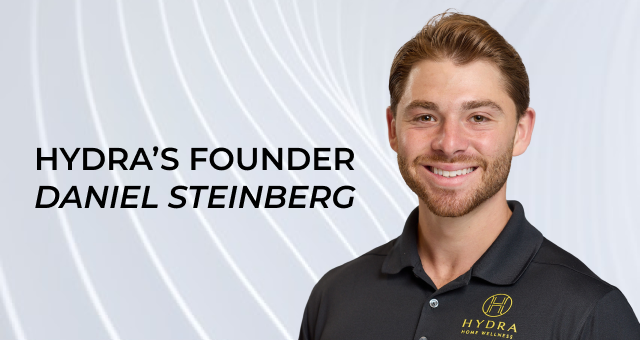
Hydra’s Founder Daniel Steinberg on the New Biological Necessity of Home Design
For years, Daniel Steinberg’s job was to help clients escape the weight of everyday life. Spending three years curating tailor-made, high-end travel experiences, he mastered the art of exclusivity, hospitality, and meticulous detail. But alongside his obsession with luxury aesthetics, Daniel harbored another passion: a deep curiosity for biohacking, longevity technologies, and human optimization. He realized that while a bespoke vacation could temporarily reset the nervous system, the ultimate luxury wasn’t a temporary escape—it was a permanent infrastructure.
Today, as the Founder and CEO of Hydra Home Wellness, Daniel has successfully brought these two worlds together. Hydra sits at the rare, sophisticated intersection where luxury design meets rigorous biological necessity. By translating his background in high-end hospitality into residential architecture, Daniel is redefining what it means to truly live well.
We sat down with Daniel to discuss his personal journey from luxury travel to home biohacking, the mechanics of building frictionless environments for deep sleep and HRV optimization, and how Hydra is transforming modern estates from mere status symbols into powerhouse ecosystems for regeneration and longevity.
Daniel, “Wellness” has become a broad term. How do you define it through the lens of Hydra Home Wellness? Are you building luxury spas, or do you view these spaces as essential medical/biological infrastructure?
I think “wellness” has become such a broad umbrella term that it has almost lost its meaning. Through the lens of Hydra, I define wellness as the design of environments that help people optimize the way they live.
Now, there is certainly an element of luxury in what we do, but we are not just building high-end spas. These spaces should be beautiful and elevated for a simple reason: if a space is beautiful, you are naturally going to want to spend more time there. But the mission behind Hydra runs much deeper than aesthetics. I view these spaces as part of the home’s DNA. Just as people consider a kitchen, an office, or a traditional home gym essential to their lifestyle, I believe recovery spaces are going to become a standard feature of high-end, high-performing homes.
At Hydra, we consider the full sensory experience of a wellness space—the materials, the lighting, the scent, and the flow between a sauna, cold plunge, steam room, red light therapy, or whatever other modalities are integrated into the layout. All of it matters.
You build rituals in spaces where those rituals feel like they truly belong. That is the essence of Hydra. We are creating environments that make recovery feel intentional and seamlessly built into the rhythm of the home.
Many people still see cold plunges or saunas as “luxury hobbies.” At what point do you believe these tools shift from being a luxury to a biological necessity for the modern human?
I don’t know if I would say every single person needs a cold plunge or a sauna in their home, but I do think these modalities—which were once considered niche indulgences—are quickly becoming expected amenities in the modern luxury home.
I think a lot about this shift in home wellness. For a long time, wellness was something you had to actively seek out. You blocked out time for a workout, booked a spa day, or traveled to a dedicated facility for red light therapy, acupuncture, or a sauna session.
There is real value in that, but the nature of anything you have to schedule is that it can also be canceled. When life gets busy, the first things to go are usually the ones that require the most effort to show up for. The gym, the spa, and the wellness studio are all opt-in environments, which by definition carry an opt-out contingency.
The most powerful behavior change happens when the friction of decision-making is removed entirely. The best wellness tool is the one that is already there when you wake up. It’s the same reason people build home gyms: access changes behavior far more than intent ever could.
The movement toward at-home wellness was already well underway, but the pandemic accelerated every convenience-focused trend. As people spend more time at home, they naturally want their living spaces to reflect their desired lifestyle. Hydra is a organic extension of that shift.
Hydra offers a “turnkey” process. What is the most ambitious or unique recovery space you have been asked to design so far?
One of the most ambitious projects we are currently working on is for a client who wants to transform their basement into a full wellness floor, mimicking the feel of a spa you would find at a high-end resort.
The vision includes a sauna, a cold plunge, and, most uniquely, a dedicated salt cave room.
This is exactly the type of project that represents where home wellness is heading. It embodies the idea that rituals and practices once reserved exclusively for luxury spas, resorts, and wellness centers are now becoming attainable within the comfort and privacy of your own home.
Between saunas, cold plunges, steam, and red light therapy—if you could only install one modality in a home to impact longevity, which would it be and why?
If I had to choose just one, I would choose a sauna.
Cold plunges have been getting a lot of attention recently, and I think they are great, but the sauna offers the strongest combination of health benefits and long-term compliance. There is also no true substitute for it in the way there can be for cold exposure. You can always take a cold shower or jump into a cold body of water, but replicating a proper sauna experience at home is incredibly difficult without the actual infrastructure.
Sauna use supports so many aspects of health: relaxation, cardiovascular conditioning, heat exposure, muscle recovery, and sleep. It is also something a lot of people genuinely enjoy, which matters just as much as—if not more than—the physiological benefits.
I always tell clients that the best wellness tool is the one you actually use consistently. A sauna is approachable, fits into a routine with minimal friction, and can become a true ritual that you stack with other healthy habits. It’s tough to beat.
How do you see home wellness technology evolving over the next 5–10 years? Do you foresee AI-driven environments that automatically adjust to our biomarkers?
Yes, it certainly feels like that is where the industry is heading. I’m not going to pretend to know exactly what the future will look like, but we are definitely already moving in that direction.
As more people adopt wearables like Whoop, Oura rings, and other biometric tracking devices, it only makes sense that these technologies will eventually communicate with home systems designed to support health and recovery.
I can envision homes that feature recovery environments that automatically adjust based on your sleep quality, cortisol levels, training regimens, body temperature, or HRV. For example, if your body is under-recovered, an AI-driven system could sync with your sauna to recommend a lower-heat session. It might suggest more red light therapy, dedicated breathwork, or a sleep-focused protocol depending on how it knows your body responds to those specific modalities. Just like the AI we use today, the more context you give it, the better its recommendations will be.
Some infrared saunas already feature programs that can be personalized around specific goals and needs. The next logical step is connecting these disparate systems so they can talk to one another. Once the wearable, the sauna, the lighting, the plunge, and the rest of the home operate in sync, things will get incredibly interesting.
All that being said, I believe technology should make wellness simpler, not more complicated. The goal is not to turn your house into a clinical lab; the goal is to make the right recovery decision easier, more personalized, and deeply embedded into the rhythm of your life. We are still a ways away from full integration, but I think it’s naive not to recognize this as the inevitable direction.
We often talk about “Hormesis” (beneficial stress). How do Hydra’s installations help clients find the “sweet spot” of stress without crossing the line into overtaxing the nervous system?
This is a really vital point because while these tools are extremely powerful, they are, by definition, stressors. With that in mind, it is crucial to use these modalities intelligently. The goal is not to prove how much discomfort you can tolerate, but rather to apply the right dose of stress so the body adapts without being pushed too far. “Minimum effective dose,” as doctors like to say.
With Hydra, part of the value we provide lies in helping our clients think through not only what should go into their space, but how they should actually use it to accomplish their goals. That is why we provide personalized wellness rituals and routines for each client after their installation is complete.
No two people are the same. Someone who is training intensely, sleeping poorly, or carrying a high level of professional stress will need a very different protocol than someone who is simply looking to add more structure to their daily wellness routine.
We help clients navigate what can often be an overwhelming market and turn it into something practical. The goal is never intensity for the sake of intensity. The goal is to create a sustainable rhythm that helps the client feel genuinely better in their day-to-day life.
When designing a wellness space, how do you balance the aesthetics of a luxury home with the strict technical requirements of medical-grade equipment?
This is really the core of what Hydra does. The ultimate challenge is getting both the technical execution and the aesthetic design of the home to work in perfect harmony. You need proper electrical planning, ventilation, drainage, service access, structural support, and product specifications. But you also need the space to feel intentional, cohesive, and aesthetically aligned with the rest of the home.
The number one mistake people make is treating the equipment as an afterthought. If you simply drop a sauna or a cold plunge into an empty room, it usually feels disconnected. We aim to bring those technical requirements into the design conversation early, collaborating with professionals across each domain so the final result feels entirely seamless.
I always say that Hydra sits at the intersection of construction, design, and wellness technology. Our job is to understand and speak all three of these very different languages fluently. When those pieces communicate properly, the result is a space that is not only highly functional, but also beautiful and tailored to the client’s home.
You work with both private homeowners and the hospitality industry. Have you noticed a shift in what hotel guests expect? Is “wellness” replacing “leisure” as the primary goal of travel?
I do think there is a profound shift happening. My background is actually in luxury travel. I spent three years designing high-end itineraries for clients, and even then, I noticed a trend that has only become more obvious today: people expect a certain level of wellness integration when they travel.
Something I was always conscious of was making sure clients came back from their trips feeling truly refreshed, rather than feeling like they needed a vacation from their vacation. This was something I constantly emphasized. People are no longer just looking for beautiful properties; they are looking for destinations that actively support their lifestyle and wellness goals.
Whereas a basic hotel gym used to suffice, guests today are looking for saunas, cold plunges, recovery lounges, optimized sleep environments, and experiences that feel genuinely restorative. Wellness is becoming a core part of the hospitality value proposition, not just an extra amenity.
For the hospitality sector—whether you’re a luxury hotel or a premium rental property owner—the opportunity is massive, and the data backs this up. A well-designed wellness offering makes a property more memorable, commands a premium, and aligns with what modern guests truly appreciate. It gives people a compelling reason to choose one property over another, and a stronger reason to return.
What is the most common mistake people make when trying to build their own recovery setup without professional guidance?
The most common mistake we see is purchasing equipment before planning the actual space.
People will order a sauna, a cold plunge, or a red light panel because the marketing is compelling or the photos look great on social media. It’s only later that they realize their electrical setup isn’t sufficient, their drainage situation wasn’t considered, the product doesn’t physically fit, the layout feels awkward, or the equipment simply looks out of place.
The product itself is only one piece of the equation. There is a multitude of structural and design variables that must be carefully evaluated when putting together a true wellness sanctuary.
Do you collaborate with physicians or sports scientists when specifying equipment for clients with specific health goals?
When a client has specific medical needs or pre-existing health conditions, we always encourage them to consult with their physician or a qualified healthcare professional.
Hydra is not a medical provider, and we do not diagnose conditions or prescribe protocols. Our role is strictly to design and integrate the right environment and equipment based on the client’s personal goals, lifestyle, and spatial constraints.
That said, we are always eager to collaborate with physicians, trainers, physical therapists, longevity clinics, and other experts when a project calls for it. I believe the best outcomes happen when the home environment directly supports the broader healthcare or wellness plan the client already has in place.
What does the “Daniel Steinberg Morning Protocol” look like? How do you personally utilize the tools you provide to your clients?
My own routine is honestly quite simple. I usually start the day with movement, sunlight, hydration, and a walk. I am fortunate to have access to a sauna and a cold plunge at home, but I generally save those for later in the day. I have found that my body responds much better to those controlled stressors when they aren’t the very first thing I subject myself to in the morning.
That said, if I find myself needing an extra boost of energy, I will occasionally incorporate deliberate cold exposure in the morning, either through a cold shower or a quick plunge.
Ultimately, I don’t think the goal should be to maintain some flawless “biohacker” routine, which you see so many wellness influencers preaching online. The real value lies in building a life where healthy behaviors are effortlessly repeatable. That is the exact same philosophy driving Hydra: the environment should make the right choice feel as obvious and frictionless as possible.
Our magazine focuses heavily on the “stress epidemic.” How do your installations specifically target HRV (Heart Rate Variability) and deep sleep optimization? Do you see measurable data from your clients?
The question of stress is especially important to us because, at its core, what we do is create environments that help people shift out of a chronic “fight-or-flight” state. That is a big part of why I view this work as so vital and rewarding.
Unfortunately, you cannot simply think your way out of stress; you can’t just decide to feel calm. If I tell you not to think about a purple elephant, what do you immediately think about?
The nervous system can, however, be shifted through physical inputs. What saunas, cold exposure, float therapy, and similar modalities do is give the body a tangible, physiological pathway back to regulation.
There is an interesting paradox here, because many of these tools are actually controlled stressors. In a sauna, for instance, your heart rate increases, your body works harder to manage the heat, and you experience a real physiological strain. But the rebound after that stressor passes helps shift the autonomic nervous system toward a deeply parasympathetic, restful state.
With a cold plunge, the shock of cold water triggers an acute stress response—your body naturally wants to fight or flee. The practice of staying in the water, slowing your breath, and choosing calm is quite literally training your brain and body to maintain control under pressure.
The ultimate goal with Hydra is to design an environment that makes that downregulation easier. This, by its very nature, improves your HRV and sleep quality. A lot of our clients already track these metrics through wearables, so they can see the direct, positive impact these daily habits have on their data.
What was the “Aha!” moment that led you to found Hydra Home Wellness? Was there a specific personal recovery journey that started it all?
The “aha” moment came when I realized there was a massive gap between the wellness products people wanted and the way those products were actually being integrated into their homes.
Truthfully, the wellness market can be overwhelming and incredibly difficult to navigate. There are dozens of great sauna options, countless cold plunge companies, endless red light panel providers, and a highly saturated landscape of equipment manufacturers. On the other side, there are many incredible builders and talented interior designers. But there wasn’t really anyone sitting directly at the intersection who understood how all of those pieces should complement one another.
They all speak completely different languages, and there was no one there to act as the translator.
Piecing together a home wellness space—whether during a new build, a major renovation, a retrofit, or an addition—is often an extremely fragmented process. The homeowner is usually left trying to coordinate the equipment logistics, interior design, installation tracking, electrical loads, plumbing specifications, and the overall experience entirely on their own.
Hydra was born out of that exact frustration. The idea was to create a company that could make home wellness feel just as considered, cohesive, and turnkey as any other luxury design or construction project.
If you could gift a Hydra wellness suite to any person in the world to help them perform better, who would it be?
I would probably say my younger brother.
Like a lot of people—myself very much included—he carries a tremendous amount of stress. We all know someone who is constantly on the go, constantly thinking, and rarely giving themselves the time or permission to actually decompress from everything life throws at them.
A wellness suite obviously won’t remove external stressors from someone’s life, but it can provide a dedicated sanctuary to decompress. It offers a place to sit in the heat (both literally and figuratively), breathe, recover, and feel like your home is actively working to support you.
That is really what home wellness means at its best. It isn’t just about luxury or optimization; it’s about giving people a private, intentional space to recover from the weight of everyday life.
For our readers who are just beginning their biohacking journey: what is the first step they should take in transforming their home into a space for healing?
Start with the environment before you buy the equipment.
You don’t need to purchase every single modality all at once. The first step is simply to look at your home and ask whether the physical environment actually supports the way you want to feel. Is there a dedicated place where you can unwind? Is your bedroom actively optimizing your sleep? Is your bathroom or outdoor space set up to become part of a daily ritual? Are healthy behaviors easy to execute, or do they require an immense amount of effort?
From there, choose just one modality that you know you will actually use consistently. For most people, that might be a high-quality sauna, a red light panel, an optimized sleep setup, or a simple cold exposure routine.
The goal is never to build the most complex or high-tech setup possible. The goal is to design a home that naturally helps you become the best, most recovered version of yourself without you having to overthink it.
Discover more from Doctor Trusted
Subscribe to get the latest posts sent to your email.