Earlier this year, WCH brought together some of the most influential names in credentialing at the National Credentialing Business Summit. Representatives from CAQH, NAMSS, AAPC, HBMA, and other organizations that shape the standards of the industry joined the conversation, alongside credentialing professionals from across the country.
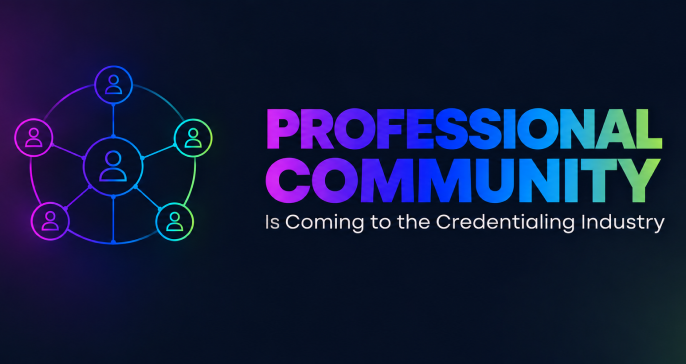
The summit wasn’t just a series of presentations. It became a genuine, open conversation about where the credentialing profession is headed — and out of that conversation came a decision we’re excited to share: the industry is ready for its own community. Independent. Open. Built for the entire profession, not for any single company.
Why This Community Exists
The goal is ambitious and clear: to grow into a mature, full-fledged professional community — a unified, influential voice for the credentialing industry in the US that major hospitals, partners, and regulators have to reckon with.
This isn’t a tagline for a welcome email. It’s the entire reason the community exists. And it only works under one condition: the community has to be perceived as neutral ground, not as one vendor’s marketing asset. That’s why it carries the name “powered by WCH” rather than “WCH Community” — and why it’s open to specialists who have never worked with WCH at all.
How We Get There
Getting to that point requires four stages, built in a specific order. Skipping a step doesn’t speed things up — it just undermines everything built after it.
1. Basecamp — the core. A 24/7 peer network where specialists work through real, complex payer cases together. This is what brings people back every week — practical value, right now, from people who understand the work.
2. The Summit Standard — the benchmark. Membership status that, over time, becomes recognized as the industry’s quality benchmark. This comes only after Basecamp has proven its value — you formalize trust that already exists, not trust you’re hoping to earn later.
3. System Evolution — data and influence. Once the community has scale and thousands of specialists contributing real case data, that data becomes something powerful: an independent Payer Accountability Index, plus a credible foundation for advocating AI and automation in credentialing.
4. Vision — the collective voice. The endpoint of the whole sequence: a community whose voice the industry has to take seriously.
The logic behind this order is simple. Certifying a status before there’s an active base to stand behind it is worthless. Asking the industry for data before there’s trust and scale gets you nothing usable. So the plan follows this sequence strictly — no shortcuts.
What’s Already Happening
The full public launch of the community is set for November. But the groundwork is already underway. Our COO Olga Khabinskay is actively running a Facebook group right now, where credentialing professionals are already discussing ideas, raising proposals, and shaping what this community becomes before it officially launches:
Join the community group on Facebook
For ongoing updates as the launch approaches, subscribe to news on the summit page:
Ready for What’s Next
The credentialing industry is moving toward more transparency and professionalization — including a broader conversation around licensing for credentialing specialists. We don’t see that as a threat. We see it as an opportunity: the more organized and defensible the profession becomes, the stronger every individual specialist’s position gets within it. That’s exactly why we’re inviting colleagues across the industry to join — to share experience, support one another, and help write the rules of the profession together, instead of adapting to them alone.
Let’s make the credentialing industry more transparent, more secure, and more confident — together.
Discover more from Doctor Trusted
Subscribe to get the latest posts sent to your email.