
The Art of the Perfect Cocktail — and the Art of Switching Off
A Halloween Special with 215 Speakeasy
Physicians spend their days being the calm one in the room: the person who anticipates, decides, and holds everything together. Medical school teaches you to run a code. It does not teach you how to be a guest.
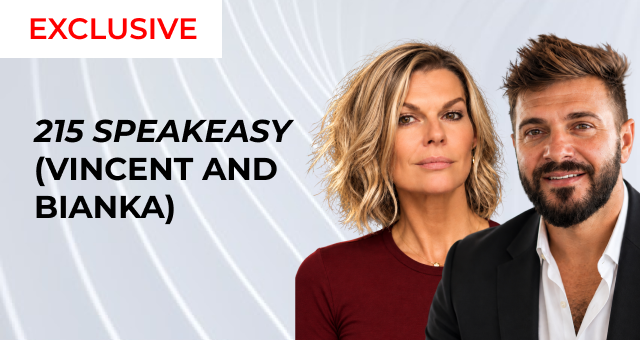
We realize this is a slightly unusual prescription for a medical journal. Halloween seemed like a fair excuse to practice. So this month we left the clinic for the bar and handed the shaker to two people who know a thing or two about precision, timing, and staying calm when the plan goes sideways. Vincent and Bianca run 215 Speakeasy, which began as an actual speakeasy and grew into cocktail classes, private and corporate events, luxury bar catering and even yacht-crew training. They talked to us about craft, hospitality, and the surprisingly hard skill of letting someone else take care of you for a change.
Two recipes follow, one with alcohol and one without, both made with equal care. Drink responsibly; you know the risks better than most. Аnd consider this your official permission to be off duty for an evening.
Vincent
A great cocktail looks effortless when it reaches the guest, but there is a lot of technique behind it. What are the details that most people never notice?
Probably the biggest thing people don’t notice is everything that happened before the cocktail was even ordered. A professional cocktail is about preparation and consistency. The temperature of the glass, the quality and amount of ice, dilution, how long you shake or stir, the freshness of the citrus, the balance between sugar, acidity, and alcohol, even the way a garnish releases aroma as you bring the glass to your mouth: all of those small details matter.
When it is done correctly, the guest shouldn’t necessarily notice the technique. They should just take a sip and think, “Wow, that’s good.” That simplicity is actually the result of a lot of work.
Medicine and mixology seem worlds apart, but both depend on precision, consistency, timing, and knowing what to do when something goes wrong. Do you see any parallels between the two?
Absolutely, although obviously the consequences are very different! What I recognize is the importance of precision and preparation. Behind a bar, especially during a large event, you need to know your ingredients, your measurements, your equipment, and your procedures. And when something doesn’t go according to plan, you have to stay calm, understand what went wrong, and adjust quickly.
There is also a human element. You can know every recipe perfectly, but you still have to listen to the person in front of you.
How much of mixology is science, and how much is intuition?
I would say you need the science first, and then intuition comes with experience. There is definitely science involved. Acidity, sugar, dilution, temperature, density, carbonation, infusion, and even how aroma affects what we perceive as flavor all matter.
But once you understand those rules, intuition becomes incredibly important. After years of making cocktails, you can taste something and immediately feel that it needs a little more acidity, bitterness, sweetness, or dilution. The science gives you the foundation. Intuition is what allows you to create.
When you create a new cocktail, where do you begin: the spirit, the flavor profile, the season, the presentation, or a story you want the drink to tell?
It changes every time. Sometimes I start with a spirit or ingredient that I want to showcase. Sometimes it is the season. Sometimes a client gives me a theme, a brand, or even a color to work with. But I usually think about the experience before I think about the final recipe. Where is the cocktail being served? Who is drinking it? What is the occasion? What do I want that first sip to feel like? Then I build around that. Presentation comes later for me.
A beautiful cocktail is great, but if the drink doesn’t taste good, the presentation doesn’t matter. Flavor always has to come first.
You teach people who may have never made a cocktail before. What have you learned about teaching a complicated skill to someone who initially thinks, “I could never do this”?
One of my favorite parts of our cocktail classes is watching that change happen. People arrive saying, “I don’t know anything about cocktails,” or, “I’m going to be terrible at this.” Twenty minutes later they’re shaking a cocktail, tasting it, adjusting it, and becoming confident.
I try not to make mixology intimidating. I explain why we are doing something instead of just giving people a recipe to follow. Once someone understands why we shake one cocktail and stir another, or why we need acidity or dilution, everything starts making sense. And most importantly, our classes are supposed to be fun. You’re allowed to make mistakes. Sometimes a mistake even leads to a better cocktail.
What does the act of making something purely creative, without a professional or business objective, do for you?
For me, making a cocktail can completely change my focus. When I’m creating something new, I’m thinking about aroma, flavor, texture, balance, and presentation. I’m working with my hands. I’m tasting and adjusting. For those few minutes, my attention is completely on what is in front of me.
I think there is something valuable about having an activity where the objective isn’t productivity. You’re simply making something because you enjoy the process, and then hopefully sharing it with someone else.
Is there such a thing as a “perfect” cocktail, or is perfection actually about matching the drink to the person drinking it?
For me, it is absolutely about the person. That philosophy is actually at the heart of 215 Speakeasy. We have always approached cocktails almost like an omakase experience. Instead of putting a huge menu in front of someone, I like asking, “What are you in the mood for?” You can make what is technically a perfect Negroni, but if the person doesn’t enjoy bitter flavors, it isn’t the perfect cocktail for them. The perfect cocktail is the one that makes that particular guest want another sip.
Your work involves a lot of sensory judgment: aroma, texture, temperature, balance and taste. Which of these tends to be underestimated?
Aroma. People think they taste primarily with their tongue, but aroma has an enormous influence on the experience of a cocktail. That is why garnish shouldn’t just be decoration. Expressing an orange peel over a drink releases oils. Fresh herbs can completely change the first impression before the cocktail even touches your lips.
Temperature is probably the other underestimated element. The exact same cocktail can taste completely different when it is not cold enough or when it has been over-diluted.
What is the biggest mistake people make when trying to recreate a professional cocktail at home?
Overcomplicating it. People sometimes think they need twenty ingredients and professional equipment to make a great cocktail. You don’t. Start with good ingredients, fresh citrus, plenty of good ice, and correct measurements. Don’t just pour everything by eye. A quarter-ounce difference can completely change the balance of a drink.
I’d rather drink a beautifully made three-ingredient Daiquiri than a twelve-ingredient cocktail that isn’t balanced.
If a physician came home after a particularly difficult day and wanted to make one cocktail as a ritual for leaving work behind, what would you make for them, and why?
I would make an Old Fashioned. There is something about the ritual that forces you to slow down. Bourbon or rye, a little sugar, bitters, ice, and orange. Nothing complicated.
Put everything into the glass, add a large piece of ice, and stir slowly. Express the orange peel over the top. It takes a couple of minutes, and that is part of the point. You’re not just pouring yourself a drink; you’re making something. And after a particularly difficult day, sometimes the better answer is simply making the ritual without the alcohol. The act of slowing down is what matters.
Halloween is a perfect excuse to play with unexpected ingredients, colors, and presentation. What makes a Halloween cocktail memorable without turning it into a gimmick?
Halloween gives us permission to be theatrical: smoke, unusual colors, dramatic garnishes, interesting glassware. I love playing with those elements. But I never want someone to say, “That looked amazing,” and then leave the drink on the table.
The theatrical element should support the cocktail rather than hide it. You can create something dark, smoky, or mysterious using ingredients that naturally belong together. The best reaction is when someone takes the picture because it looks incredible, and then finishes the entire cocktail because it tastes incredible.
Can you tell us about the most unusual cocktail you have ever created or served? What made it work, or fail?
Some of my favorite experiments have come from taking ingredients that people don’t normally associate with cocktails and asking, “Can I make this work?” I’ve worked with ingredients and techniques ranging from matcha, yuzu, and ginger to clarified cocktails, culinary foams, dehydrated garnishes, and savory elements. I also love taking ingredients that would normally be waste, such as citrus peels, fruit, or herbs, and finding another purpose for them.
Not every experiment works. That’s part of creating. Sometimes an idea sounds fantastic in your head, but once you taste it, one ingredient completely dominates everything else. I don’t consider that a failure. You adjust the proportions, change the technique or occasionally abandon the idea altogether. For me, the most interesting cocktails aren’t unusual just for the sake of being unusual. They surprise you at first, but once you taste them, everything makes sense.
Bianca
You and Vincent have very different strengths: he focuses on the craft, while you focus on the experience, design, and business behind it. What have you learned from building a company as a couple?
I think the biggest thing we’ve learned is that you have to let each person be great at what they’re great at. Vincent and I are very different, and that has actually become one of our biggest strengths.
Vincent is incredibly creative. He can look at ingredients and immediately start thinking about flavors, techniques, and how to turn them into a cocktail. I’m usually looking at the bigger picture: What does the guest see when they walk in? How does the experience flow? What does the menu look like? What are they going to remember afterward? And, of course, how do we actually make all of this work as a business?
We definitely don’t always agree! But over the years, we’ve learned to trust each other’s strengths. I think 215 Speakeasy became what it is because neither one of us could have built it exactly this way alone.
You have more than 20 years of experience in events. What makes an experience genuinely memorable rather than simply well organized?
A well-organized event is one where everything happens when it’s supposed to. A memorable event is one where people feel something.
After more than 20 years in events, I’ve learned that people rarely remember every detail of an evening, but they remember how you made them feel. It’s usually the little things that do that: something personalized, an unexpected presentation, remembering someone’s name or favorite drink, making a guest feel included, or creating a moment they weren’t expecting.
That’s something we put a lot of thought into at 215. A cocktail can taste amazing, but if we can also put a company logo on it, create a beautiful garnish, add a smoke bubble, print personalized menus, or get the entire room laughing during a cocktail competition, suddenly it becomes a memory.
For me, luxury isn’t necessarily about making something extravagant. It’s about making people feel that someone thought about them.
People in high-responsibility professions are used to taking care of others. What do you think makes it difficult to simply become the guest?
I think when you spend your entire day being the person everyone relies on, it can be difficult to suddenly turn that off. You’re so accustomed to anticipating what someone else needs, solving the next problem and being responsible for what happens next.
That’s actually one of the things I love about what we do. When people come into one of our experiences, for the next couple of hours they don’t have to be responsible for everything. We’ve already thought about the details. Everything is there for them. Their only job is to participate, learn something new, laugh, make a cocktail and enjoy the people around them.
Sometimes being the guest means allowing someone else to take care of you for a change.
What do you notice about people when they walk into one of your cocktail experiences? Can you actually see them “switch off”?
Absolutely. And it’s one of my favorite things to watch.
At the beginning, especially with corporate groups, people can still be very much in work mode. You can almost see it: phones are still out, people are talking about work, everyone is a little more reserved.
Then we put a shaker in their hands.
Once people start measuring ingredients, shaking cocktails, tasting each other’s drinks and laughing because somebody shook theirs a little too enthusiastically, the whole energy changes. Titles disappear. People who may work together every day suddenly interact differently.
By the end, they’re taking pictures, cheering each other on, and asking Vincent questions about what they can make at home. You really can watch that transition happen, and I think that’s one of the reasons interactive experiences are so powerful.
215 Speakeasy began as an actual speakeasy and has evolved into classes, private events, corporate experiences, luxury bar catering, and yacht-crew training. What has that evolution taught you about knowing when to reinvent a business?
It taught us that reinvention doesn’t necessarily mean abandoning what you started. Sometimes it means recognizing what people love most about what you created and finding new ways to bring it to them.
215 really did begin as a speakeasy. But over time, we realized people weren’t only coming for cocktails. They loved learning about them. They loved the interaction with Vincent. They loved being part of the process.
That opened the door to cocktail classes, then private and corporate events, luxury bar experiences, and eventually even training yacht crews. The setting kept changing, but the heart of what we do never really changed: craftsmanship, hospitality, and creating an experience around a cocktail.
I think running a business teaches you to listen. Sometimes your customers show you where the business should go next before you see it yourself.
What is one thing you think people in high-pressure professions could learn from hospitality?
To be present.
Great hospitality requires you to pay attention to the person in front of you. You notice their energy, you listen, you adapt, and for that moment, you’re not thinking about ten other things.
I think we all live at such a fast pace now that being completely present has almost become a luxury.
And hospitality also reminds us that small gestures matter. You don’t always need to do something enormous to change someone’s day. Sometimes making someone feel seen, welcomed, and taken care of is enough.
Vincent & Bianca
If you could design an “after-hours prescription” for a physician — not a medical prescription, but a ritual for reconnecting with life outside work — what would it include?
First, change the environment. Put the phone away, change out of your work clothes, put on some music, and do something completely unrelated to your profession.
Then make something with your hands. It could be cooking dinner, making a cocktail or zero-proof drink, gardening, playing music: anything that requires you to be present rather than thinking about the next responsibility.
For us, the most important ingredient would be sharing that moment with someone. Sit down, talk, laugh, eat something good, make a drink together, and actually take the time to enjoy it.
Our after-hours prescription: Disconnect. Create. Share. Repeat as needed.
Complete this sentence: “After a long day, everyone deserves to ______.”
After a long day, everyone deserves to slow down and enjoy something made just for them.
Two Special Halloween Cocktails
THE NIGHT SHIFT
A Halloween-inspired after-hours cocktail
The Night Shift is dark, elegant, and slightly mysterious, with a balance of bourbon, blackberry, bitter orange, and warming spice. It is designed as the drink you make when the workday is officially over.
Ingredients
2 oz bourbon
3/4 oz fresh lemon juice
1/2 oz blackberry syrup
1/4 oz Amaro Nonino
2 dashes aromatic bitters
1 small pinch of sea salt
Preparation
Add all ingredients to a shaker with ice and shake until very cold. Double strain over one large clear ice cube in a chilled rocks glass.
Presentation
Garnish with a charred orange slice, fresh blackberries, and a touch of smoke. For the Halloween presentation, lightly smoke a rosemary sprig and capture the aroma underneath the glass before serving. When the glass is lifted, the smoke escapes and the cocktail is revealed.
Why we created it
The Night Shift represents that moment when responsibility ends and personal time begins. The blackberry gives it a deep, almost blood-red color, while bourbon and Amaro Nonino bring warmth and complexity. The rosemary smoke creates the Halloween atmosphere through aroma rather than artificial colors or excessive decoration.
CODE CLEAR
A zero-proof after-hours cocktail
We didn’t want the zero-proof option to feel like an afterthought. Code Clear is designed with the same attention to acidity, bitterness, aroma, texture, and presentation as a traditional cocktail.
Ingredients
2 oz lemon-honey tea (chilled)
1 oz fresh blood orange juice
3/4 oz fresh lime juice
1/2 oz hibiscus syrup
2 oz chilled sparkling water
2 drops saline solution
Preparation
Add the lemon-honey tea, blood orange, lime, hibiscus syrup, and saline to a shaker with ice. Shake briefly and strain into a chilled coupe glass. Top with chilled sparkling water.
Presentation
Garnish with a hibiscus flower and a lime peel ribbon. The deep crimson color is natural, coming from hibiscus and blood orange, creating a dramatic Halloween look without artificial coloring.
Why we created it
We called it Code Clear because it represents the opposite of an emergency: everything is handled, the shift is over, and now you can decompress. Lemon-honey brings softness, citrus gives acidity, hibiscus adds aroma and structure, and carbonation brings texture and length. Simply a good cocktail that happens to contain no alcohol.
Discover more from Doctor Trusted
Subscribe to get the latest posts sent to your email.