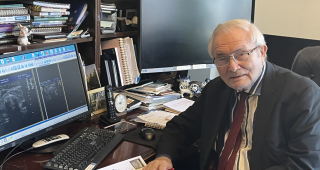
Today, we have the privilege of speaking with Dr. Yefim Vaynshelbaum, an esteemed Radiologist with over 38 years of professional experience. While Dr. Vaynshelbaum no longer sees patients in person due to limiting his practice, he now evaluates only the results of diagnostic procedures, contributing his expertise to the medical community. With a career that stretches back to before his formal education even began and spans from Leningrad to New York, Dr. Vaynshelbaum brings a wealth of knowledge and wisdom to our discussion on the evolution of diagnostic radiology. Let’s explore his remarkable journey and insights together.
What initially drew you to the field of diagnostic radiology, and how has that initial fascination evolved as you’ve gained experience?
My medical education started long before I entered the medical school. My mother was a surgeon, my grandfather was a general medical practitioner, and it was natural for me to watch and ask what she was doing in the hospital.
I was very lucky at Leningrad First Medical Institute to be surrounded by professionals of high quality and intelligence. The quality of a physician is the quality of his teachers because the base of knowledge in any profession is a transfer of experience from one generation to another.
Overall, diagnostic radiology offers a fascinating blend of scientific precision and clinical impact. Perhaps it was the intrigue of using cutting-edge technology like CT scans and MRIs to see inside the human body in a non-invasive way. I was drawn to the detective work aspect, searching for subtle clues that could lead to a diagnosis and ultimately, a treatment plan.
As I’ve gained experience, my understanding of the role of a radiologist has deepened. While technical expertise is crucial, it’s clear that a good radiologist is much more than just an image interpreter. They are physicians with a broad understanding of human health and disease. For example, understanding a particular disease’s symptoms and risk factors allows you to tailor your analysis, focusing on specific areas or searching for characteristic signs.
Looking back on your career, how has the field of diagnostic radiology evolved? Can you pinpoint some of the most significant changes you’ve witnessed?
Discover more from Doctor Trusted
Subscribe to get the latest posts sent to your email.