
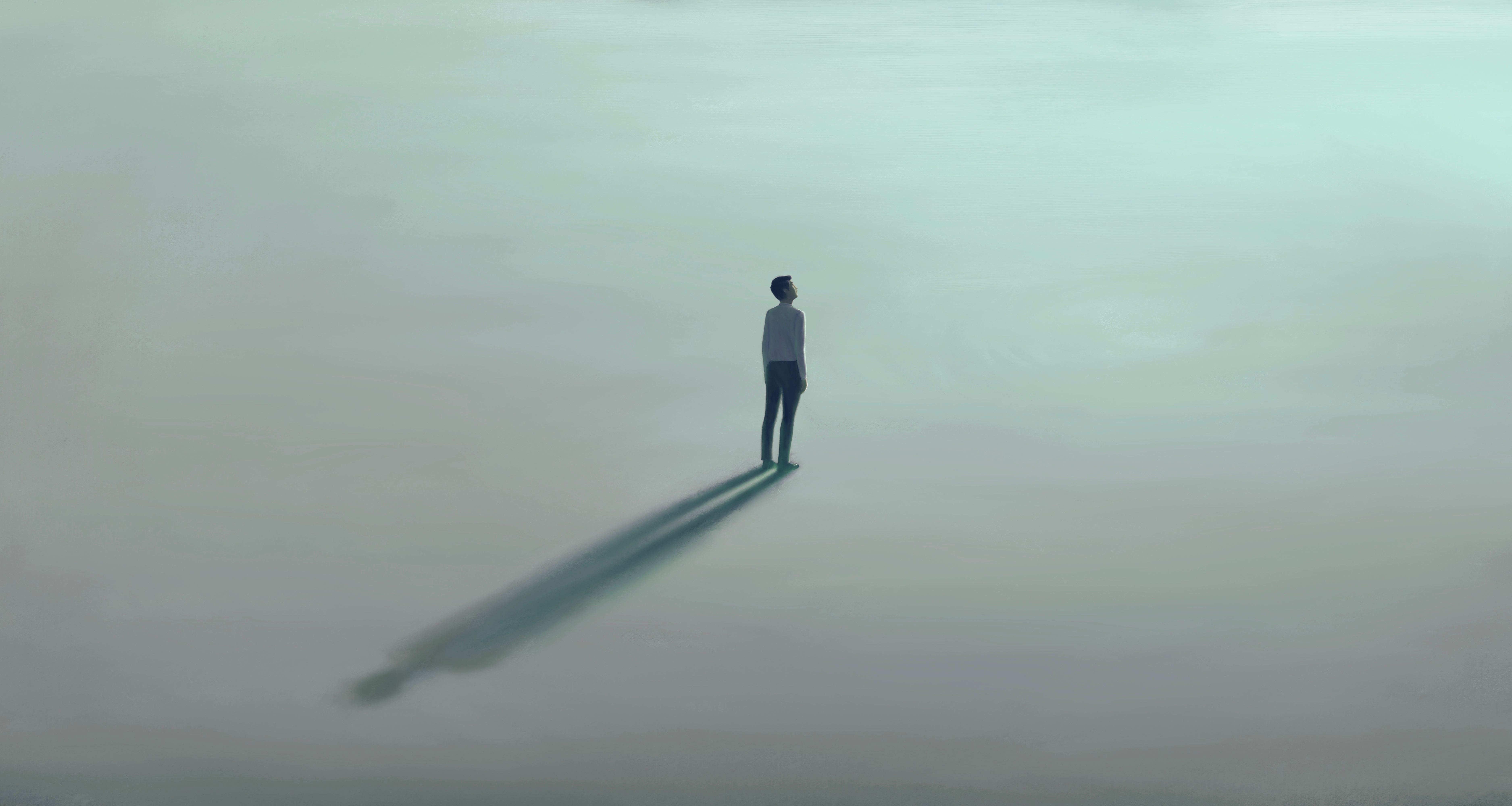
You can spend the day with patients, messages and meetings and still feel that nobody knows how you are doing. New research suggests that the gap between having people around and feeling connected to them may matter for healthy aging.
A physician’s calendar can be full from morning to night. Patients need attention, colleagues need answers, family members need time, and there are messages to return. It is easy to mistake all that contact for connection.
But being needed is not the same as feeling understood. A day packed with interaction can leave little room for the kind of relationship in which you stop being the person with the answers.
A 2026 study in Nature Communications gives a reason to take the distinction seriously. Researchers analyzed data from 277,489 UK Biobank participants, aged 40 to 69 at recruitment, to see how loneliness and social isolation were associated with the number of years people could expect to live free of major physical disease and mental disorders. Both mattered, though not in quite the same way.
Two Different Ways to Be Alone
The researchers treated loneliness and social isolation as separate experiences. Social isolation means limited social contact or few connections. Loneliness is subjective: the feeling that the relationships you have don’t give you the connection you need.
The two can overlap, but they don’t have to. Someone who lives alone, works remotely or has a small circle of friends may feel well connected. Another person may have a partner, children, colleagues and a crowded calendar and still feel lonely.
For physicians, the distinction may be worth some thought. The work puts them in constant contact with people, usually in situations built around someone else’s needs and requiring attention, empathy and composure. Professional interaction, however meaningful, doesn’t automatically replace reciprocal personal relationships. This is not a claim that doctors are lonelier than other people; the study did not examine that. Counting conversations just says little about whether someone feels connected.
What the Researchers Found
The study included adults who had none of seven conditions at baseline: type 2 diabetes, cardiovascular disease, chronic respiratory disease, neurodegenerative disease, cancer, depression or anxiety. The researchers estimated how many years people could expect to live without these conditions, comparing groups by reported loneliness and social isolation.
The clearest differences appeared in people who were both lonely and socially isolated. At age 50, compared with people with neither, women in this group had an estimated 2.4 fewer years free of the major physical diseases studied and 3.7 fewer years free of depression and anxiety. For men, the estimates were 1.7 fewer years free of physical disease and 5.8 fewer years free of the two mental disorders.
These are estimates of disease-free life expectancy at the population level. They are not a prediction that any individual will die earlier, and they don’t mean every lonely person will develop a chronic illness. The study shows associations, not that loneliness alone caused the differences. One pattern stands out, though: the associations were stronger for years free of depression and anxiety than for years free of the physical diseases examined.
Why a Busy Life May Not Be Enough
A full schedule can give the impression that relationships are being maintained, through messages during the day, quick conversations between appointments, professional events and family logistics squeezed into whatever time remains. Frequency of contact says little about its quality.
Think of the difference between having someone to call for a recommendation and having someone to call after a bad day, when you don’t feel like explaining yourself. Both have value. They serve different purposes.
In demanding professions, relationships can slowly organize themselves around usefulness. You become the reliable colleague, the one who remembers birthdays, the one who listens. Those roles can be meaningful, and they can also leave little space to admit uncertainty or ask for support. The study did not test this idea. It is a reason to ask whether the relationships you already have allow honesty, mutual attention and support in both directions.
Can Healthy Habits Make Up for Loneliness?
The researchers also asked whether a healthier lifestyle changed the association. For social isolation, it did: the link with fewer disease-free years became smaller among people with healthier lifestyles. For loneliness, the researchers did not find a statistically significant narrowing.
That does not mean exercise, good nutrition or sleep are ineffective for people who feel lonely, or that connection can replace medical care. It means the study found no evidence that a healthy lifestyle significantly offset the loneliness association in the way it did for isolation. The researchers suggest loneliness may need different interventions. Going to the gym supports physical health. It doesn’t necessarily resolve the feeling that there is no one with whom you can be fully yourself.
A Different Question to Ask Yourself
It is easy to measure a life in hours worked, patients seen, messages answered and workouts completed. Relationships don’t fit that kind of scorecard. Instead of asking whether you see enough people, try a few quieter questions:
- Who can you talk to without feeling responsible for keeping the conversation positive?
- Whose company leaves you feeling more like yourself, rather than more tired?
- When something hard happens, who do you actually want to tell?
These are not a screening tool, and there is no right number of close relationships. Some people need a wide circle, others feel connected with a few trusted people.
If you recognize a gap, the response doesn’t have to be dramatic. It could be a conversation that isn’t squeezed between obligations, a call to someone you’ve been meaning to see, or letting a trusted person know when you are struggling instead of saying everything is fine. For physicians, it may also mean making room for relationships outside the clinical role, where being competent and calm isn’t the price of belonging. If loneliness is persistent, or comes with depression, anxiety or significant distress, seeking professional support is reasonable and not a personal failure.
What the Study Does Not Say
It does not show that friendship adds a fixed number of years to anyone’s life. It does not suggest that people who enjoy solitude are unhealthy, or that a large network guarantees well-being. It does suggest that loneliness and social isolation are each associated with fewer years free of major illness, and that the difference between them matters.
For people who spend their working lives caring for others, that can be uncomfortable. You can be surrounded by people who depend on you and still have too few relationships in which you feel supported yourself. A full life and a connected life can look alike from the outside, and they are not always the same.
Sources
- Wang X, Ma H, Heianza Y, et al. “Associations of loneliness, social isolation and healthy lifestyle with life expectancy free of major physical disease and mental disorder.” Nature Communications, 2026: https://doi.org/10.1038/s41467-026-74498-8
- UK Biobank, publication page for the study: https://www.ukbiobank.ac.uk/publications/associations-of-loneliness-social-isolation-and-healthy-lifestyle-with-life-expectancy-free-of-major-physical-disease-and-mental-disorder/
- News-Medical, “Loneliness and social isolation cost people years of healthy life,” September 22, 2026: https://www.news-medical.net/news/20260922/Loneliness-and-social-isolation-cost-people-years-of-healthy-life.aspx
Discover more from Doctor Trusted
Subscribe to get the latest posts sent to your email.